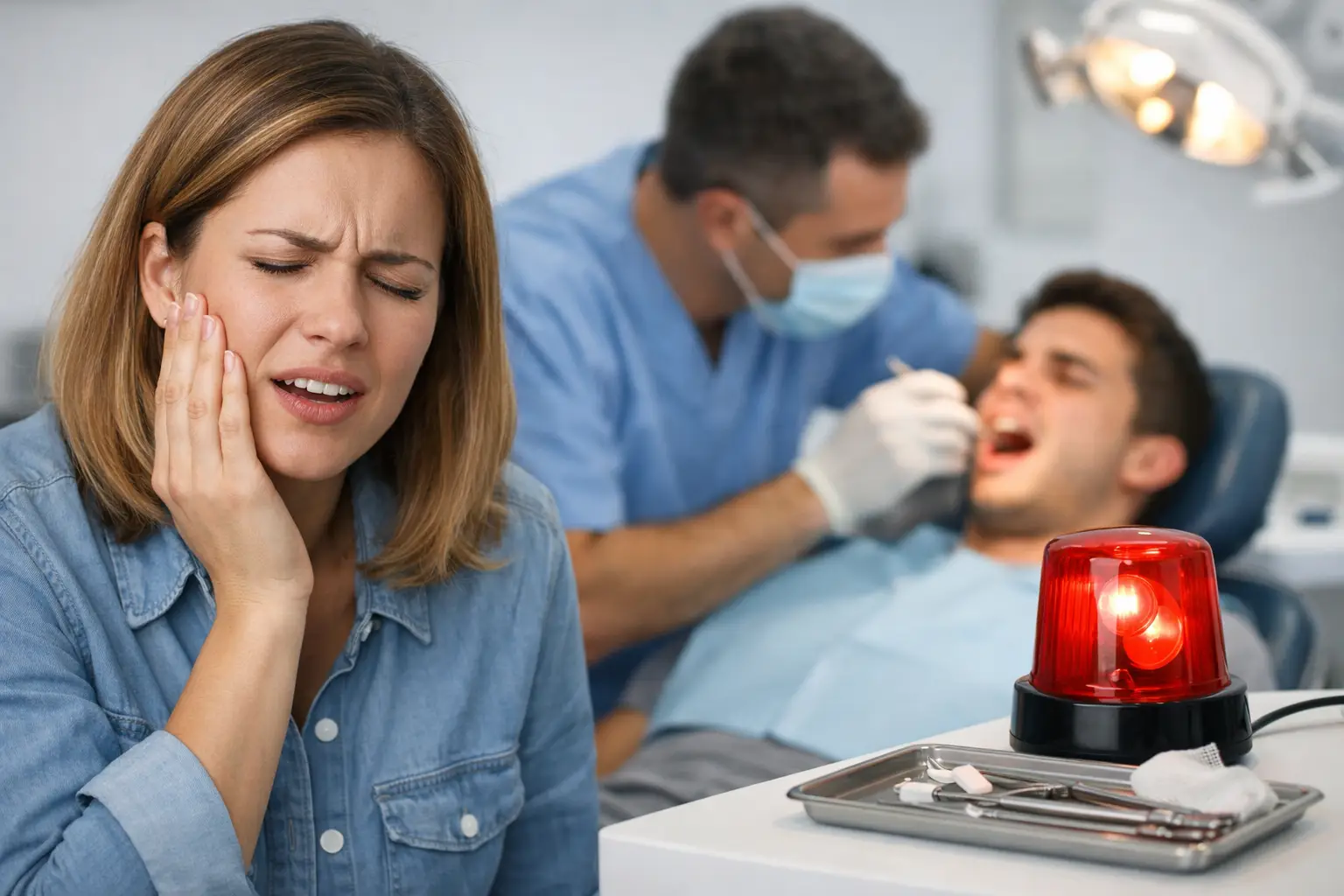
A cracked tooth at 9 p.m. feels very different from a dull toothache that has been coming and going for a week. Both deserve attention, but only one may need urgent care. If you have ever wondered what counts as a dental emergency, the simplest answer is this: it is any dental problem that involves severe pain, swelling, bleeding, infection, or a damaged tooth that cannot safely wait.
That said, not every uncomfortable dental issue is an emergency, and not every emergency looks dramatic. Sometimes the biggest warning sign is a deep, throbbing pain that keeps getting worse. Sometimes it is a knocked-out tooth after a fall. Sometimes it is facial swelling that seems minor at first but can quickly become more serious. Knowing the difference can help you act quickly without panicking.
What counts as a dental emergency and what can wait?
A true dental emergency usually means one of two things. Either you are dealing with a problem that could threaten your health, or you have a time-sensitive issue where fast treatment could save a tooth and prevent more extensive care later.
Severe swelling, uncontrolled bleeding, signs of infection, trauma to the teeth or jaw, and sudden intense pain all fall into that category. These are the situations where calling a dentist right away makes sense. In some cases, especially when breathing or swallowing is affected, you should go straight to urgent medical care.
On the other hand, a small chip with no pain, mild sensitivity, or a lost filling that is not causing major discomfort may be urgent but not necessarily an emergency. You still should not ignore these issues. They can worsen quickly, but they may be able to wait until the next available dental appointment rather than requiring immediate same-day treatment.
Signs you should call a dentist right away
Pain is one of the clearest signals, but context matters. A mild toothache after biting into something cold is different from pain that wakes you up at night or makes it hard to eat, focus, or sleep. If the pain is severe, constant, or getting worse, it should be treated as urgent.
Swelling is another major red flag. Swollen gums around one tooth can point to an abscess or infection. Swelling in the cheek, jaw, or face deserves even more attention, especially if it spreads, feels warm, or comes with fever. Dental infections do not always stay localized, which is why waiting too long can lead to much bigger problems.
Bleeding that does not stop is also a reason to seek care immediately. A little bleeding after flossing irritated gums is common. Ongoing bleeding after trauma, an extraction, or a mouth injury is not.
You should also call right away if a permanent tooth has been knocked out, loosened, or pushed out of position. These situations are highly time-sensitive. The faster a dentist can evaluate and stabilize the tooth, the better the chance of saving it.
Dental problems that are usually emergencies
A knocked-out adult tooth is one of the clearest examples. If this happens, hold the tooth by the crown, not the root. If it is dirty, rinse it gently with water without scrubbing. Try to place it back in the socket if you can do so carefully. If not, keep it moist in milk or saliva and get dental help immediately. Minutes matter here.
A cracked, broken, or fractured tooth can also be an emergency, depending on the extent of the damage. If the tooth is painful, bleeding, visibly split, or sensitive to pressure, you should be seen quickly. Even when a crack seems small, it can expose the inner part of the tooth and lead to infection or further breakage.
An abscessed tooth is another urgent situation. This often causes severe throbbing pain, swelling, bad taste or odor in the mouth, gum tenderness, or a pimple-like bump on the gums. Because it may involve infection, it should not be left alone in hopes that it will settle down.
A lost crown or filling is a little more situational. If it is causing intense pain, sharp edges, or exposing a very sensitive tooth, it may require prompt treatment. If it is uncomfortable but manageable, it may not be a true emergency, though it still should be addressed soon.
When a mouth injury may need medical care, not just dental care
Some dental emergencies overlap with medical emergencies. If you have a suspected broken jaw, heavy bleeding, trouble breathing, trouble swallowing, or major facial trauma, start with emergency medical care.
The same is true if swelling spreads rapidly or is accompanied by fever, weakness, or feeling generally unwell. Dental infections can become serious. A dentist can treat many urgent oral health problems, but when your airway, jaw, or overall health may be at risk, emergency medicine comes first.
For parents, it can be hard to judge injuries in children because there is often a lot of fear and tears involved. If a child has a baby tooth knocked out, you generally do not try to reinsert it. If a permanent tooth is knocked out, quick dental care is important. Any injury involving the head, jaw, or uncontrolled bleeding should be evaluated right away.
What feels urgent but may not be a true emergency
Not every dental problem needs same-day care, even if it is frustrating. A mild toothache, slight gum tenderness, a small chip with no pain, food stuck between teeth, or a missing filling without major sensitivity often falls into the category of prompt but not emergency treatment.
Still, there is an important trade-off here. Waiting a day or two for a regular appointment may be completely reasonable if your symptoms are stable. Waiting several weeks usually is not. Small issues have a way of becoming painful, expensive, and disruptive when they are put off.
If you are unsure, call and describe exactly what you are experiencing. A good dental team will ask about pain level, swelling, bleeding, trauma, and how long the problem has been going on. That conversation alone can usually tell you whether you need immediate care or the next available visit.
What to do while you wait to be seen
If you are in pain, a cold compress on the outside of the cheek can help with swelling and discomfort. Over-the-counter pain relievers may also help, as long as you take them as directed and they are safe for you personally. Rinsing gently with warm salt water can soothe irritated tissues.
If a tooth has broken, save any pieces if you can. If a crown or filling has come out, keep it with you and avoid chewing on that side. If a tooth is loose or has shifted after an injury, do not keep testing it with your tongue or fingers. That can make things worse.
One thing to avoid is placing aspirin directly on the gums or tooth. It will not fix the problem and can irritate the tissue. Also avoid ignoring swelling, especially if it is increasing. Pain can sometimes fade even while infection is getting worse.
Why acting early matters
People often hesitate because they are busy, nervous, or hoping the pain will pass. That is completely understandable. Dental problems are stressful, and when anxiety is part of the picture, even making the call can feel like a lot.
But early treatment is often the gentlest treatment. A tooth that is treated quickly may need a simple filling or crown. The same tooth, left untreated, might later need root canal therapy or extraction. An infection caught early is usually easier to manage than one that has spread.
This is especially important for people who have had difficult dental experiences in the past. If fear has made you delay care before, you are not alone. A calm, judgment-free approach can make urgent visits feel much more manageable, even when the situation is stressful.
If you are not sure, it is still worth asking
One of the hardest parts of any dental problem is uncertainty. You do not want to overreact, but you also do not want to wait too long. If you are asking yourself what counts as a dental emergency, trust the fact that something feels wrong and get guidance.
In many cases, a quick call can give you clarity and peace of mind. Whether the answer is come in right away, monitor it overnight, or head to emergency medical care, knowing your next step matters. At D on D Dental, that kind of support is part of making care feel less intimidating and more human.
If your mouth is telling you something is not right, listening early is usually the kindest thing you can do for yourself.