
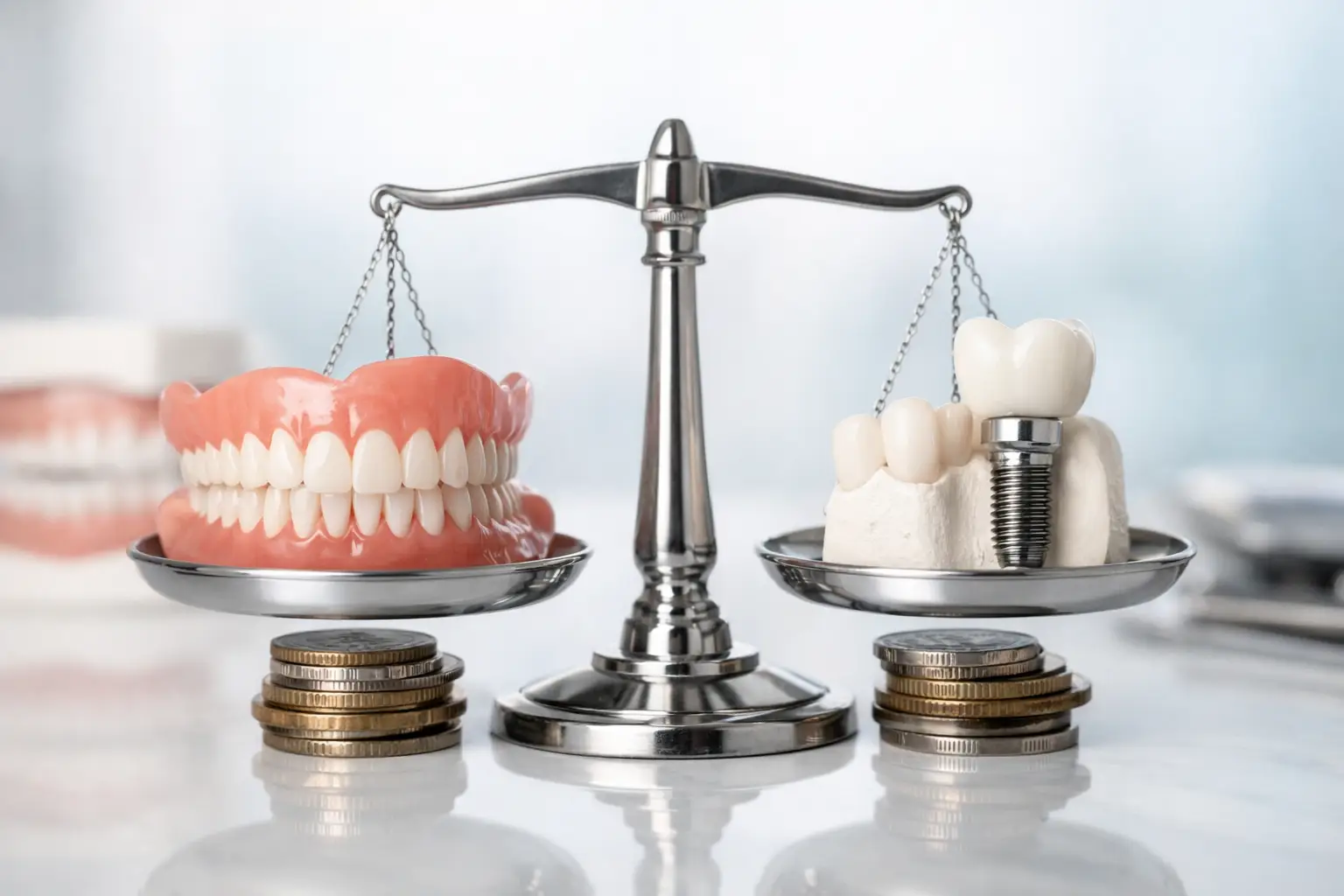
Sticker shock is often the first thing people feel when comparing dentures vs implants cost. One option usually looks far more affordable upfront, while the other can feel like a major commitment. But the real decision is not just about the first bill. It is about comfort, function, maintenance, and what you may end up spending over time.
If you are replacing missing teeth, cost matters. It should. At the same time, the lowest initial price is not always the lowest overall value. The right choice depends on your oral health, bone support, lifestyle, and how important stability and long-term convenience are to you.
Dentures vs implants cost: the basic price difference
In simple terms, dentures usually cost less upfront than implants. Traditional full or partial dentures are removable appliances, and they tend to involve fewer procedures, less treatment time, and lower starting fees. For many patients, that makes dentures the more accessible first step.
Dental implants usually cost more because they are a more involved treatment. An implant is placed in the jawbone, then restored with a crown, bridge, or implant-supported denture. That means the fee is not just for one item. It often includes imaging, planning, surgery, healing time, and the final restoration.
A general way to think about it is this: dentures are often the budget-friendly short-term option, while implants are often the higher-investment long-term option. Neither is automatically better for everyone.
What actually affects the cost?
The phrase dentures vs implants cost sounds simple, but there is no one-size-fits-all number. Several factors can change the total.
How many teeth are being replaced
Replacing one tooth with a single implant is very different from replacing a full arch of teeth. A partial denture for a few missing teeth will usually cost less than a full denture. In the same way, one implant costs much less than multiple implants or a full-mouth implant case.
The condition of your gums and bone
If you have bone loss, gum disease, or teeth that still need to be removed, treatment can become more complex. Some implant patients need bone grafting or extractions before implants can be placed. Those steps add to the total cost and timeline.
Dentures can sometimes be made even when bone volume is limited, although fit and stability may become more challenging as bone changes over time.
The type of denture or implant treatment
Not all dentures are the same. Immediate dentures, full dentures, partial dentures, and implant-supported dentures all come with different fees. The same goes for implants. A single implant crown, an implant bridge, and a full-arch implant restoration are very different treatments.
This is why a quick online estimate can be misleading. The treatment category matters just as much as the treatment name.
Materials and customization
More natural-looking materials, stronger components, and a more customized fit can affect price. Patients who want the most realistic appearance or a more precise restoration may pay more, whether they choose dentures or implants.
Upfront cost versus long-term value
This is where many people change how they look at the decision. Dentures often win on upfront affordability. Implants often win on longevity and stability.
Traditional dentures may need relines, adjustments, repairs, or replacement over the years. As the jaw changes shape, dentures can loosen. Adhesives may help, but they do not solve every issue. If a denture stops fitting well, eating and speaking can become frustrating.
Implants generally involve a larger initial investment, but they are designed to be a more stable and lasting solution. They can help preserve bone in a way dentures cannot. That may reduce some of the changes in jaw shape that happen after tooth loss.
That does not mean implants are maintenance-free. They still require excellent home care, regular dental visits, and sometimes future restoration work. But many patients feel the daily convenience and security are worth the higher starting cost.
Comfort and function matter too
Cost is easier to judge when you think about daily life. If you want an option you can remove and clean, and you are comfortable with a period of adjustment, dentures may suit you well. Many patients do very well with them, especially when they are properly fitted and regularly checked.
If you want teeth that feel closer to natural teeth, implants often provide more biting strength and more confidence when eating or talking. People who worry about slipping, clicking, or needing adhesive often prefer implants for that reason.
The best value is not always the cheapest treatment. It is the one that fits your needs without creating stress you did not plan for later.
Are implant-supported dentures a middle ground?
For many patients, yes. Implant-supported dentures can offer more stability than traditional dentures without requiring a full set of individual implants. This option uses a smaller number of implants to help hold a denture in place.
From a cost perspective, implant-supported dentures usually fall somewhere between traditional dentures and more extensive implant reconstruction. They can be a practical compromise for patients who want better retention and comfort but need to stay mindful of budget.
This option can be especially helpful for lower dentures, which are often harder to keep stable with a traditional removable fit alone.
Insurance, payment plans, and financial help
One reason people delay treatment is fear of not being able to manage the cost. That fear is understandable, especially when treatment involves several steps.
Dental coverage varies widely. Some plans may help with dentures but provide limited support for implants. Others may cover portions of related procedures, such as extractions or exams, even if implant placement itself has restrictions. That is why it helps to get a detailed breakdown rather than assuming everything will be covered or nothing will.
Payment plans can make a meaningful difference, especially for higher-cost restorative care. A practice that offers clear estimates, insurance guidance, and calm, no-pressure conversations about finances can make the process feel much more manageable. For patients in Toronto who are feeling overwhelmed by treatment costs, that kind of support often matters just as much as the treatment itself.
When dentures may make more sense
Dentures may be the better fit if you need the lower upfront cost, want a non-surgical option, or are not currently a strong candidate for implants. They can also be a reasonable choice if you are looking for a quicker path to replacing multiple missing teeth.
They are not a lesser option. For some patients, they are the most practical, responsible decision. The key is going in with realistic expectations about maintenance, fit changes, and long-term replacement needs.
When implants may make more sense
Implants may be worth the higher cost if you want better stability, stronger chewing ability, and a solution that feels more natural day to day. They may also be the stronger long-term investment for patients who want to avoid some of the common frustrations that come with removable appliances.
You do need enough healthy bone and gum support, or a plan to rebuild it. You also need to be comfortable with a longer treatment process. But for many patients, the improved confidence and function make that trade-off worthwhile.
The best next step is a personalized exam
Comparing dentures vs implants cost online can help you prepare, but it cannot tell you what your mouth needs. Two patients with the same missing tooth may get very different recommendations based on bone loss, bite alignment, gum health, and goals.
A good consultation should leave you with clear options, honest trade-offs, and no surprises. You should know what is included, what may come later, and which treatment best matches your budget and comfort level. At D on D Dental, that kind of conversation is meant to feel calm and judgment-free, not rushed or confusing.
If you are trying to choose between dentures and implants, give yourself permission to look beyond the first number you hear. The right answer is the one that helps you eat, speak, smile, and move forward with confidence.