
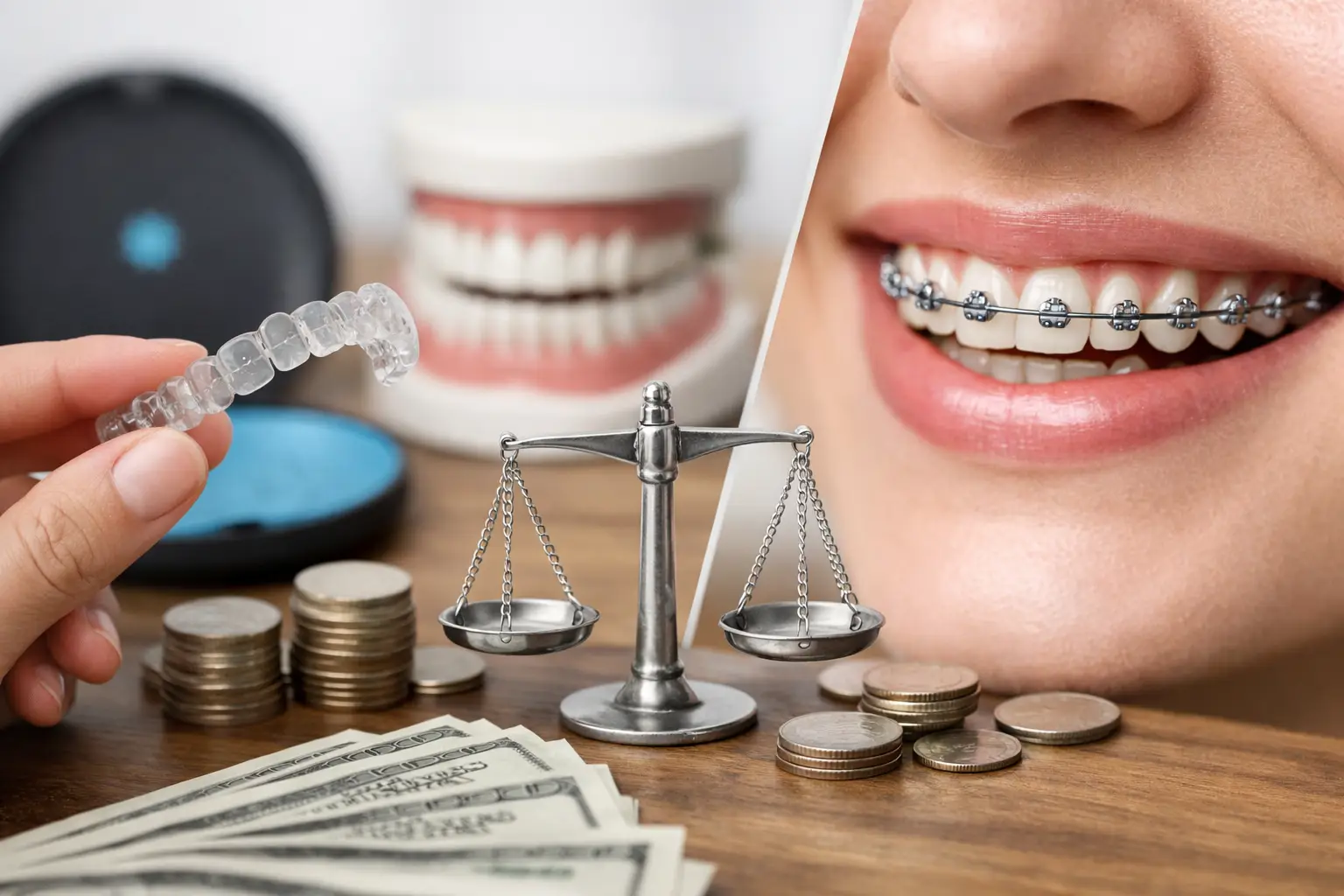
If you have been putting off orthodontic treatment because you are stuck on invisalign versus braces cost, you are not alone. For many adults and parents, the biggest question is not just which option looks better – it is which one makes sense financially once you factor in treatment length, follow-up visits, insurance, and the kind of results you need.
The honest answer is that there is no single price that fits everyone. Invisalign can cost more in some cases, braces can cost more in others, and the lowest quote is not always the best value. What matters most is how complex your case is, how long treatment will take, and what is included in the fee.
Invisalign versus braces cost: what people usually pay
In general, traditional braces and Invisalign often fall into a similar overall price range, especially for mild to moderate alignment issues. Many patients are surprised by that. They expect clear aligners to be dramatically more expensive, but that is not always true.
Braces may be the more cost-effective option for complex movement because they can treat difficult bite and alignment problems very efficiently. Invisalign may look more appealing for adults who want a discreet treatment, but the cost can rise if more aligners, refinements, or longer treatment time are needed.
That is why a quick online price comparison can be misleading. Two people asking about Invisalign versus braces cost may get very different answers because their smiles need very different kinds of correction.
What actually affects the price
The biggest factor is complexity. A small gap or mild crowding usually costs less to treat than a deep bite, major spacing, rotated teeth, or a case that involves moving teeth over a longer distance.
Treatment time matters too. A shorter, simpler case often means fewer appointments, fewer adjustments, and less overall chair time. A longer case usually requires more monitoring and more active treatment, which can influence the fee whether you choose braces or Invisalign.
The type of braces also changes cost. Standard metal braces are often the most affordable option. Ceramic braces, which are less noticeable, may cost more. Invisalign pricing can also vary depending on how many aligners are needed and whether your treatment includes refinements after the first set.
Another detail people sometimes miss is what is included. Some treatment plans bundle in retainers, follow-up visits, and minor refinements. Others quote a lower starting fee but charge extra later. A clear, written breakdown can save a lot of stress.
Why Invisalign can cost more in some cases
Invisalign is popular for good reason. The aligners are clear, removable, and easier to fit into work meetings, social events, and daily life. For adults who want a more discreet option, that convenience has real value.
But convenience can come with added cost. Invisalign treatment relies on a series of custom-made aligners, digital planning, and close monitoring to make sure teeth are moving as expected. If you lose aligners, do not wear them consistently, or need multiple refinements, the total cost may increase or the value may decrease because treatment takes longer.
There is also a personal responsibility factor. Braces stay on your teeth all day. Invisalign only works as planned if you wear it for the recommended number of hours. If that feels hard to manage, the more polished look of clear aligners may not translate into better value for you.
Why braces can cost more in some cases
Braces are sometimes assumed to be the budget option, but that is only partly true. They can be very efficient for complex cases, which may make them a strong long-term value. At the same time, if you choose ceramic braces instead of metal, the fee may be higher.
Braces also require regular adjustments and a little more care around brushing, flossing, and food choices. For some families, that is completely manageable. For others, especially busy adults or teens who play sports or have packed schedules, the practical side of braces can feel like a hidden cost.
That does not mean braces are a poor choice. In fact, for certain bite corrections, they may be the most predictable and cost-effective path. It simply means the cheapest-looking option on paper is not always the easiest one in real life.
Insurance, payment plans, and budgeting
If you are comparing invisalign versus braces cost, insurance can narrow the gap more than you might expect. Some dental plans include orthodontic benefits that apply to both braces and Invisalign. Others have age limits, lifetime maximums, or specific restrictions, so it is worth checking the details instead of assuming one option is not covered.
Payment plans can also make treatment more manageable. Many patients do not pay the full amount upfront. Monthly financing or phased payments can turn a large treatment fee into something far less overwhelming.
This is where a calm, transparent consultation really helps. Instead of trying to decode pricing from the internet, you can see what your case requires, what insurance may cover, and what your monthly cost could look like. For anxious or budget-conscious patients, that kind of clarity matters just as much as the treatment itself.
Cost versus value: the better question
A better question than Which is cheaper is Which gives me the best value for my needs?
If you are an adult who wants subtle treatment and knows you will wear aligners as directed, Invisalign may be worth the added cost if there is one. If you have a more complex bite issue or want a highly reliable treatment that does not depend on remembering to put trays back in, braces may offer stronger value.
Value also includes your lifestyle. Someone who gives frequent presentations at work may prioritize appearance. A parent exploring treatment for a teenager may care more about durability and consistency. A patient with dental anxiety may prefer the option that feels simpler and easier to manage.
There is no wrong preference here. The right choice is the one that balances results, comfort, and affordability in a way that feels realistic for your day-to-day life.
Questions to ask at your consultation
When you meet with a dentist or orthodontic provider, ask what the total fee includes. You should also ask whether retainers are separate, whether refinements are included with Invisalign, how long treatment is expected to take, and what happens if your case takes longer than planned.
It is also reasonable to ask which option the provider would choose if cost were only one part of the decision. That answer can tell you a lot. A trustworthy team will not push you toward the most expensive option. They will explain the trade-offs clearly and help you understand why one approach may fit your case better.
If you are in Toronto and want that kind of low-pressure conversation, practices like D on D Dental focus on clear guidance, gentle care, and straightforward financial discussions so patients do not feel rushed or left guessing.
Invisalign versus braces cost for adults and families
For adults, Invisalign often wins on appearance and flexibility. For families, braces may feel more practical for kids and teens who are less likely to keep track of removable aligners. That said, age alone does not decide the answer.
Some teens do very well with Invisalign. Some adults prefer braces because they do not want the pressure of remembering aligners all day. The cost comparison only makes sense when paired with habits, goals, and the kind of support that will help treatment stay on track.
That is why the best consultations are personalized. They do not just hand you a number. They help you understand what you are paying for and what kind of experience you are choosing.
Orthodontic treatment is a real investment, but it should not feel confusing or intimidating. When pricing is explained clearly and your options are matched to your needs, the decision gets much easier – and a lot less stressful.