
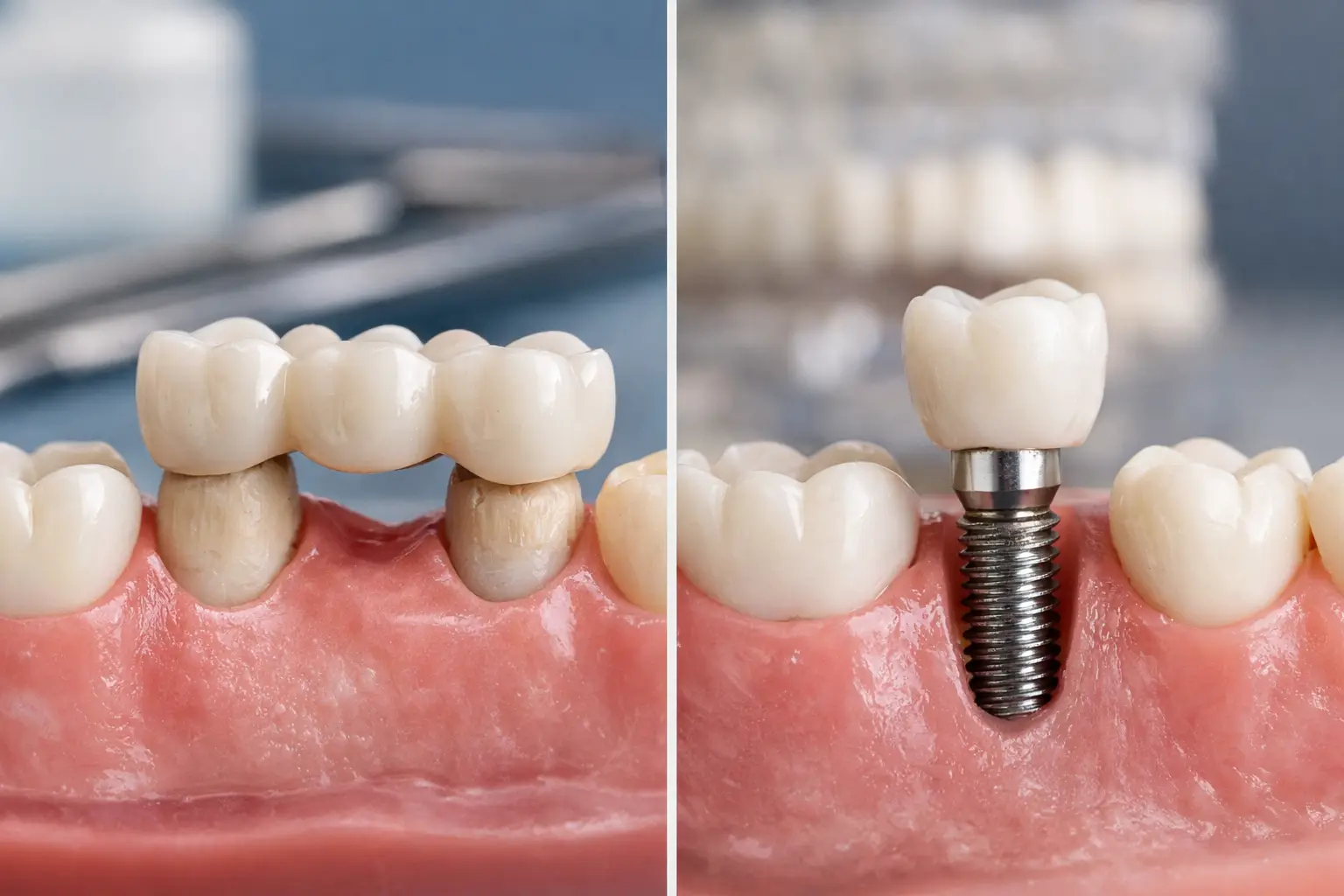
A missing tooth can change more than the way your smile looks. You may start chewing on one side, avoid certain foods, or feel self-conscious when you laugh. When considering a dental bridge versus implant, the best choice is rarely about finding one “perfect” treatment. It is about choosing the option that protects your oral health, suits your timeline, and feels manageable for your budget and comfort level.
Both treatments can restore a gap beautifully. The difference is in how they do it, what they ask of the teeth around the space, and what ongoing care they require.
Dental Bridge Versus Implant: The Main Difference
A dental bridge replaces a missing tooth by connecting an artificial tooth to the teeth beside the gap. In a traditional bridge, those neighboring teeth are shaped so crowns can fit over them. The replacement tooth sits between the crowns, effectively “bridging” the open space.
A dental implant replaces the tooth root as well as the visible tooth. A small titanium post is placed into the jawbone, where it gradually bonds with the bone. Once the area has healed, a custom crown is attached to the implant.
That root-level support is the biggest distinction. An implant stands independently, while a bridge relies on nearby teeth for support. Neither approach is automatically right for every patient. The condition of your gums, jawbone, surrounding teeth, health history, and personal priorities all matter.
When a Dental Bridge May Be the Better Fit
A bridge can be an excellent solution when you want to replace a tooth without surgery or when the teeth on either side already need crowns. If those neighboring teeth have large fillings, cracks, or significant wear, placing crowns as part of a bridge may be a sensible way to restore the whole area.
Treatment is often completed more quickly than an implant. After the supporting teeth are prepared, your dentist takes impressions or digital scans, places a temporary bridge if needed, and fits the final restoration once it is ready. For someone preparing for an event or simply hoping to restore chewing sooner, that shorter timeline can be meaningful.
A bridge may also be appropriate if there is not enough healthy jawbone for an implant and bone grafting is not desired. Some medical conditions, medications, or healing concerns can make implant treatment less predictable. Your dentist will review this carefully and without pressure.
The trade-off is that a traditional bridge requires work on adjacent teeth. Even healthy teeth must be reshaped to hold the crowns, and the area beneath the artificial tooth needs special cleaning. A bridge does not stimulate the jawbone where the tooth root was lost, so some bone shrinkage may occur over time.
With attentive brushing, flossing, and regular dental visits, a bridge can serve you well for many years. Its lifespan depends on the materials used, bite forces, oral hygiene, and the health of the supporting teeth.
What it feels like to live with a bridge
Once you have adjusted, a well-made bridge should feel comfortable and look natural. You can eat, speak, and smile with confidence. Cleaning takes a little extra practice because regular floss cannot pass directly between the joined teeth. A floss threader, interdental brush, or water flosser can help clean below the bridge and along the gumline.
That daily routine matters. If plaque builds up around the supporting teeth, decay or gum disease can threaten the entire bridge.
When an Implant May Be the Better Fit
An implant is often favored when the teeth next to the gap are healthy and you want to leave them untouched. Because the implant functions independently, it can replace one missing tooth without involving the teeth beside it.
Implants also help preserve jawbone. After a tooth is removed or lost, the bone in that area no longer receives the stimulation of chewing through a tooth root. Over time, the ridge can become thinner. The implant post helps provide that stimulation, which can support the shape of your jaw and gum tissue.
For many patients, an implant feels and functions very much like a natural tooth. You brush and floss around it rather than cleaning under a connected restoration. With healthy gums, consistent home care, and routine professional cleanings, an implant can be a long-lasting option.
However, implant treatment takes patience. After placement, the implant usually needs time to integrate with the bone before the final crown is attached. The full process can take several months, particularly if extraction healing, bone grafting, or gum treatment is needed first.
Implant placement is a surgical procedure, but it should not feel overwhelming. Local anesthesia is used to keep you comfortable, and sedation options may be available for patients who feel anxious. A calm, judgment-free conversation about what to expect can make a major difference before any treatment begins.
Who may need extra planning for an implant?
Implants are highly successful for many adults, but your dentist will first evaluate bone levels, gum health, bite, and medical history. Active gum disease should be treated before implant placement. Smoking, uncontrolled diabetes, certain medications, and heavy teeth grinding can affect healing or long-term results.
Low bone volume does not necessarily rule out an implant. In some cases, a bone graft can rebuild the area and create a stronger foundation. This adds time and cost, so it is worth discussing whether the long-term benefits align with your goals.
Comparing Cost, Time, and Long-Term Value
The upfront cost of a bridge is often lower than the cost of a single implant and crown. That can make a bridge feel more accessible, especially when an immediate replacement is needed. Insurance plans may contribute differently to each option, so checking your individual coverage is worthwhile.
An implant generally has a higher initial investment because it includes imaging, surgical placement, the implant component, and the final crown. If grafting or other preparatory care is required, the total can increase further.
Still, treatment cost is only one part of the decision. A bridge may eventually need replacement, particularly if a supporting tooth develops decay or fractures. An implant crown can also need repair or replacement over time, but the implant post itself may last much longer with proper care. No dentist can promise an exact lifespan, which is why it helps to look at both immediate expenses and expected maintenance.
At D on D Dental, financial conversations are part of respectful care, not an awkward afterthought. Before you decide, ask for a clear treatment plan, expected fees, insurance guidance, and available payment options. No surprises, just support.
Your Bite and the Location of the Missing Tooth Matter
The location of the gap can influence the recommendation. A missing front tooth raises cosmetic considerations, including matching the shade and contour of nearby teeth and maintaining natural-looking gum tissue. Both bridges and implants can create attractive results, but an implant may better preserve the gum and bone structure over time.
Back teeth handle greater chewing forces. If you grind or clench, your dentist may recommend a night guard whether you choose a bridge or implant. Protecting a new restoration is especially valuable if you have a strong bite or a history of cracked teeth.
If several teeth are missing in a row, the conversation changes again. An implant-supported bridge may replace multiple teeth without needing one implant per tooth. A traditional bridge, partial denture, or a different restorative plan might also be appropriate depending on the span and the condition of the remaining teeth.
How to Make the Decision Without Feeling Rushed
A thorough exam is the right starting point. Your dentist may use X-rays or 3D imaging to assess bone, roots, gums, and the teeth next to the gap. This information turns a broad dental bridge versus implant question into a recommendation that is specific to your mouth.
It can help to ask: Are the teeth beside the gap healthy? Is there enough bone for an implant? How soon do I need the tooth replaced? What maintenance will this option require? And what happens if I wait?
Waiting too long can allow neighboring teeth to shift into the open space. The opposing tooth may begin to over-erupt, and chewing patterns can change. You do not have to make a same-day decision, but addressing a missing tooth sooner often keeps treatment simpler.
The right restoration should let you eat comfortably, speak naturally, and smile without second-guessing yourself. A gentle consultation gives you space to understand the options, ask practical questions, and choose a path that feels right for you.