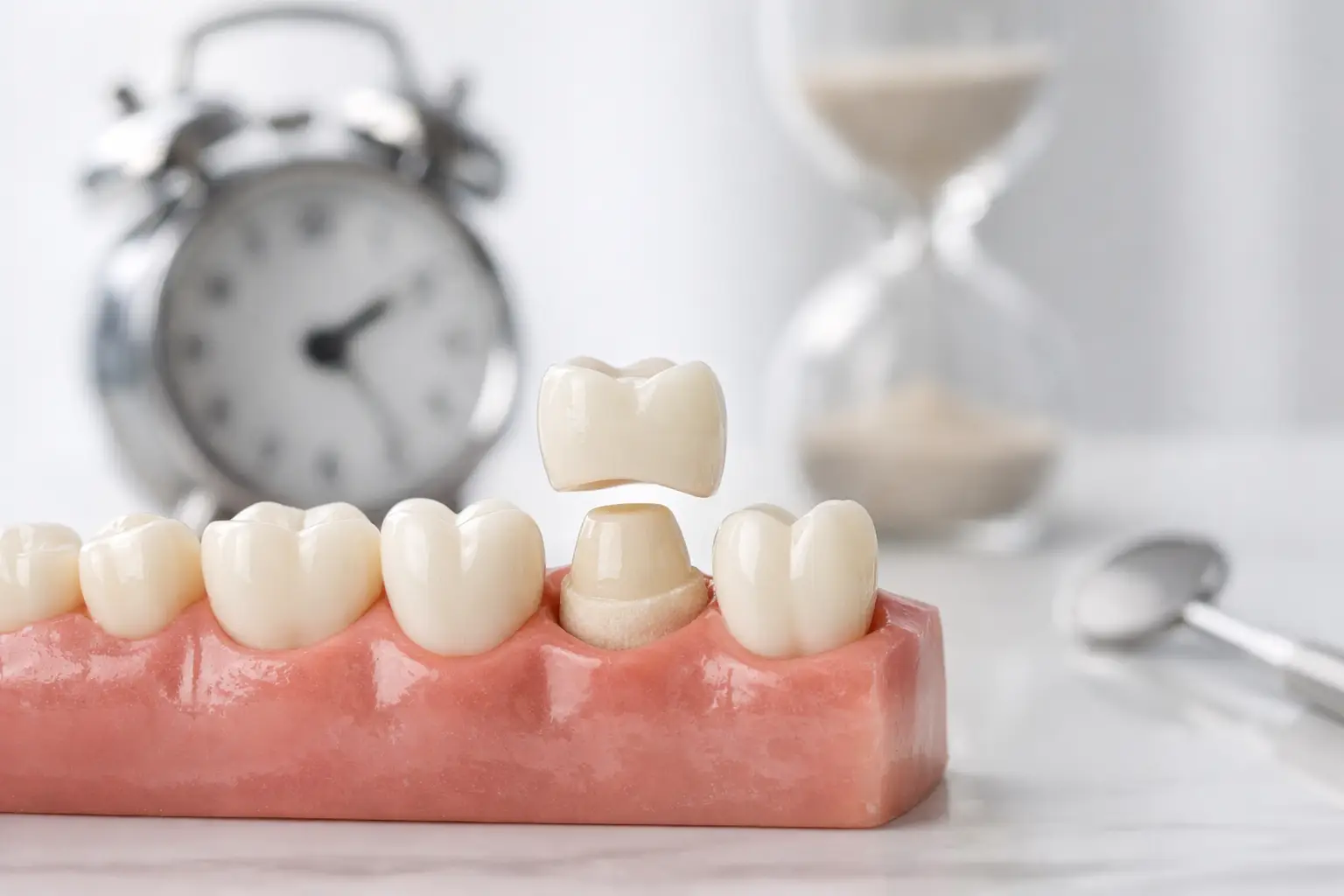
A dental crown is meant to solve a problem, not create a new one. So once you have one placed, a very fair question follows right away: how long do dental crowns last?
The short answer is that many dental crowns last between 5 and 15 years, and some last much longer with good care. But that range is broad for a reason. A crown on a back molar that takes heavy chewing pressure may wear differently than one on a front tooth. The material matters, your bite matters, and habits like grinding, clenching, or chewing ice matter too.
How long do dental crowns last on average?
Most patients are told to expect a dental crown to last around 10 to 15 years. That is a reasonable average, not a guarantee. Some crowns need replacement earlier because of damage, decay around the edge, or changes in the tooth underneath. Others stay in place and function well for 20 years or more.
What often surprises people is that the crown itself is not always the only issue. The cement seal can weaken over time, the tooth under the crown can develop decay, or the gums around it can change. In other words, a crown can fail even if the visible top still looks fine.
That is why regular exams matter. Many problems start small and can be managed more simply when they are caught early.
What affects how long dental crowns last?
There is no one-size-fits-all answer because crowns live in very different conditions from one mouth to another. A few factors have the biggest impact.
The crown material
Different materials wear differently. Porcelain and ceramic crowns are popular because they look natural, especially on front teeth. They can be durable, but they may chip under heavy force. Porcelain-fused-to-metal crowns have a strong metal base, though the porcelain layer can sometimes wear or fracture. Gold and other metal crowns are extremely durable and gentle on opposing teeth, but they are less common for visible areas because of appearance.
Zirconia crowns have become a common choice because they balance strength and appearance well. For many patients, especially those who need a crown on a molar, zirconia can be a practical long-term option.
Where the crown is placed
Front teeth and back teeth do different jobs. Crowns on molars handle much more pressure from chewing and clenching. That extra force can shorten the lifespan of some crowns, especially if the patient grinds at night. Crowns on front teeth may face less chewing pressure, but they can still chip from habits like biting nails or opening packages with the teeth.
Your bite and oral habits
A balanced bite helps crowns last longer. If one tooth hits too hard or too early, that repeated stress can wear a crown down or loosen it over time. Clenching and grinding are especially hard on crowns and natural teeth alike.
Even small habits can make a difference. Chewing ice, crunching hard candy, tearing tape with your teeth, or biting pens may not seem serious, but these habits create repeated stress that crowns are not designed to handle.
The health of the tooth underneath
A crown covers and protects a damaged tooth, but it does not make that tooth immune to future problems. If bacteria get under the margin where the crown meets the tooth, decay can still form. If the underlying tooth structure is already weak, that may also affect how long the crown stays stable.
This is one reason brushing and flossing still matter just as much after a crown is placed. Sometimes even more.
The quality of placement and follow-up care
A well-made crown that fits properly, feels comfortable in your bite, and is checked over time has a better chance of lasting. Good dentistry is not just about placing the crown. It is also about making sure the tooth is prepared correctly, the margins are sealed well, and any small issues are adjusted before they turn into bigger ones.
Signs a dental crown may need repair or replacement
Crowns rarely send a dramatic warning the moment something is wrong. More often, patients notice small changes first.
If your crown feels loose, that should be checked promptly. A loose crown may be recemented in some cases, but waiting too long can allow bacteria under it or lead to damage. Pain when biting, sensitivity to hot or cold, swelling near the tooth, or a crown that feels suddenly high or uneven can also point to a problem.
Sometimes the concern is visible. You may notice a crack, a chip, a dark line near the gumline, or gum irritation around the crowned tooth. In other cases, the crown looks fine from the outside, but an exam or X-ray shows decay underneath.
Not every issue means full replacement is needed. But if something feels off, it is worth having it looked at sooner rather than later.
How to help your crown last longer
The good news is that patients have more control here than they often think. A crown is not a fragile object, but it does benefit from consistent care.
Brush twice a day with a fluoride toothpaste and clean carefully along the gumline. Floss daily, including around the crowned tooth. A crown cannot get a cavity, but the natural tooth at the edge of the crown still can.
If you grind or clench, ask about a night guard. This can make a major difference in protecting both your crown and your natural teeth. If you tend to chew hard objects, that is one of the easiest habits to change and one of the most helpful.
Routine checkups and cleanings matter too. They allow your dentist to monitor the fit of the crown, the health of the gum tissue, and the condition of the tooth underneath. For busy adults and families, these visits are often what prevent a small issue from turning into a more stressful and more expensive one.
Can a crown last for life?
Sometimes, yes. Realistically, not always.
Some people keep the same crown for decades without trouble. Others need a replacement much sooner. That difference is not always about doing something wrong. Teeth change over time. Gums can recede. Bites shift. Old dental work simply reaches the end of its useful life.
It helps to think of a crown as a long-term restoration, not a permanent one. The goal is durability, comfort, and protection for as many years as possible. With the right material, careful placement, and steady home care, that can be a long stretch of time.
What if your crown is old but not bothering you?
This is a common situation. A crown may be 12 or 15 years old and still feel completely normal. That does not automatically mean it must be replaced. Dentists do not replace crowns by the calendar alone.
If the crown is secure, the margins are healthy, the tooth underneath looks stable, and there are no signs of decay or fracture, it may continue to do its job well. On the other hand, an old crown with hidden leakage or weakening support may need attention before symptoms start.
That is why regular evaluation matters so much. The decision should be based on what is happening in your mouth now, not just on age.
When it is worth asking your dentist more questions
If you are getting a new crown, it is reasonable to ask what material is being recommended and why. You can also ask how much force that tooth handles, whether grinding is a concern, and what kind of maintenance will help the crown last.
If you already have a crown and are wondering how long do dental crowns last in your specific case, the most honest answer is personal. Your dentist can look at the tooth, your bite, your habits, and any signs of wear to give you a much clearer idea than an online average ever could.
At a practice like D on D Dental, that conversation should feel calm and straightforward – no pressure, no surprises, just support and a plan that makes sense for you.
A crown should help you eat comfortably, protect your tooth, and take one worry off your plate. If you are unsure how your crown is holding up, getting it checked can bring a lot of peace of mind.