
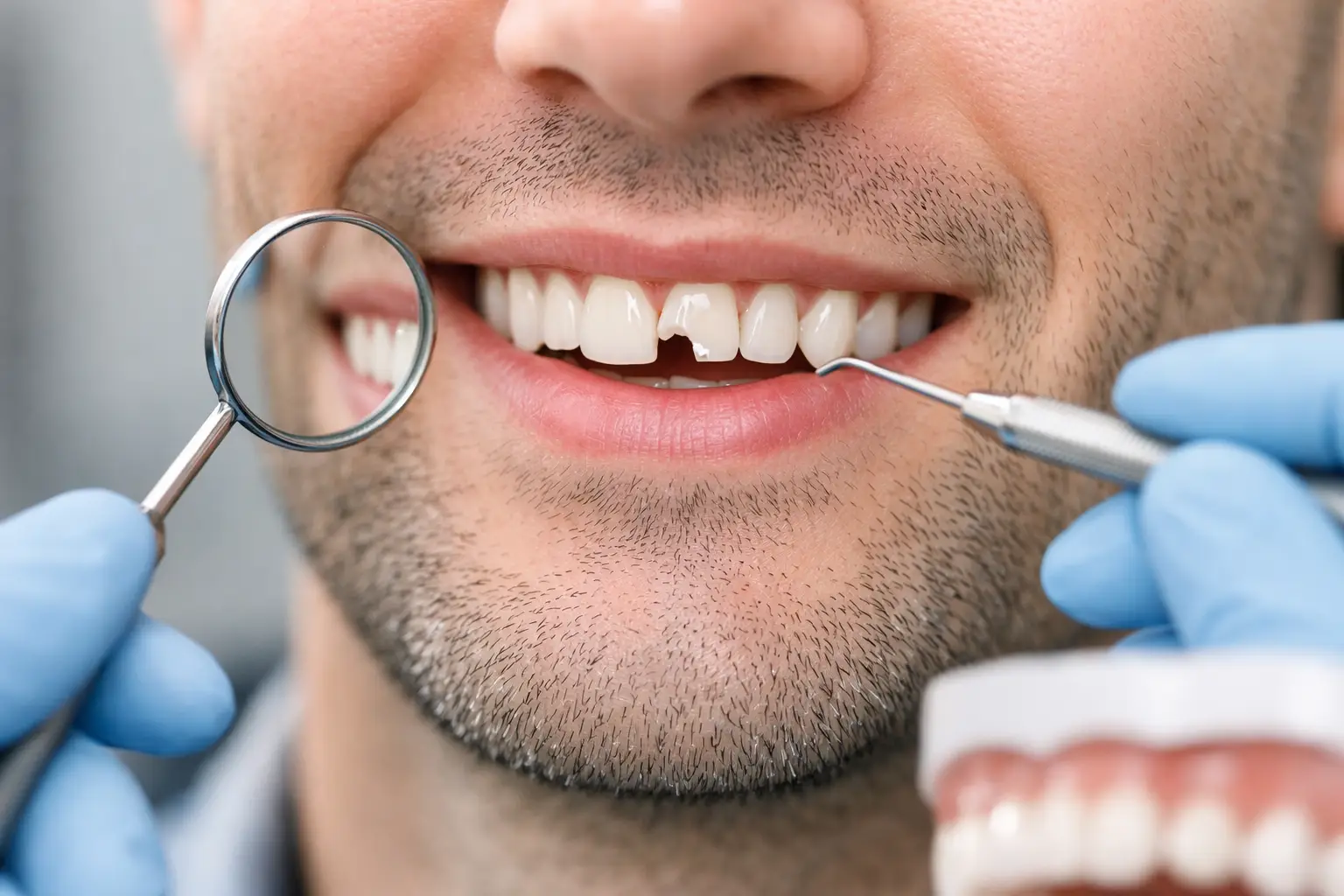
A chipped tooth can happen in a second: one hard popcorn kernel, a fall, an old filling giving way, or a tooth that has been quietly weakened by grinding. If you are searching how to fix chipped tooth damage, the reassuring news is that many chips can be repaired comfortably and conservatively. The right treatment depends on how much tooth structure is missing, where the chip is located, and whether the nerve has been affected.
You do not need to panic or feel embarrassed about it. What matters most is protecting the tooth now and arranging a dental assessment soon, especially if you have pain, sharp edges, or a visible crack.
What to Do Right After You Chip a Tooth
First, rinse your mouth gently with warm water to clear away any small fragments and check the area. If you can find the broken piece of tooth, place it in a clean container with milk, saline solution, or your own saliva and bring it to your appointment. It cannot always be reattached, but it may help your dentist evaluate the break.
If the tooth has a sharp edge that is cutting your tongue, cheek, or lip, cover it temporarily with dental wax. Sugar-free gum can work in a pinch, but only as a short-term measure. Avoid biting down on that side of your mouth, and choose soft foods until the tooth is treated.
A cold compress on the outside of your cheek can help with swelling after an injury. For discomfort, an over-the-counter pain reliever may be appropriate if you can take it safely. Do not place aspirin directly on the tooth or gums, as it can irritate the tissue.
Call a dentist promptly if the chip is more than a tiny surface flaw. A same-day or next-day visit is especially wise when the tooth is painful, sensitive to temperature, loose, discolored, or damaged after a fall, sports injury, or accident.
How to Fix a Chipped Tooth: Your Treatment Options
Dentists do not use one repair for every chipped tooth. A small chip on the edge of a front tooth calls for a different approach than a large break in a back molar. At your visit, the dentist will examine the tooth and may take an X-ray to look for deeper cracks or damage near the root.
Smoothing and reshaping for very small chips
If only a tiny amount of enamel has chipped away, the simplest solution may be smoothing the rough edge. This is often called contouring or reshaping. It can remove a sharp spot and improve the tooth’s appearance without adding material to the tooth.
This option works best when the chip is superficial and does not change how your teeth meet when you bite. It is quick, gentle, and usually does not require numbing. The trade-off is that reshaping is only suitable when very little enamel is missing.
Dental bonding for visible chips
Dental bonding is one of the most common ways to repair a chipped front tooth. Your dentist applies a tooth-colored composite resin, shapes it to blend with your natural tooth, and hardens it with a special light. The result can restore the tooth’s shape, close a small gap, and make the repair difficult to notice.
Bonding is often completed in one appointment, making it a practical option for busy patients who want a natural-looking repair without a lengthy process. It is also generally more conservative than a crown or veneer because less natural tooth structure needs to be altered.
Composite resin can stain or chip over time, particularly if you bite ice, chew pens, or grind your teeth. Still, it can often be repaired or refreshed. Your dentist can help you decide whether bonding offers the right balance of appearance, durability, and cost for your situation.
Veneers for cosmetic improvement
A porcelain veneer is a thin, custom-made shell placed over the front surface of a tooth. It may be considered when a front tooth has a larger chip, uneven edges, discoloration, or several cosmetic concerns at once.
Veneers can provide a highly polished, natural-looking result and tend to resist staining better than composite bonding. However, they are usually a more involved investment, and some enamel may need to be prepared to make room for the veneer. They are most appropriate when the tooth is otherwise healthy and the main goal is a lasting cosmetic enhancement.
Crowns for a larger break or weak tooth
When a significant portion of the tooth is missing, or the remaining tooth is cracked and vulnerable, a dental crown may offer the best protection. A crown covers the entire visible part of the tooth, helping it handle biting forces again while restoring its shape and appearance.
Crowns are commonly recommended for chipped molars because these teeth absorb substantial pressure when you chew. They may also be used for front teeth with extensive damage. Although a crown requires more preparation than bonding, it can prevent a weakened tooth from breaking further.
Root canal treatment when the pulp is exposed
A deep chip can expose or injure the soft tissue inside the tooth, known as the pulp. Signs can include severe or lingering pain, intense sensitivity to hot or cold temperatures, swelling, or a pink or red spot in the center of the break. In these cases, root canal treatment may be needed before the tooth is restored with a filling, bonding, or crown.
This may sound intimidating, but the purpose of root canal treatment is to relieve infection and save your natural tooth. Modern treatment is carefully planned around your comfort, and delaying care can allow pain or infection to worsen.
When a Chipped Tooth Is a Dental Emergency
Not every chip requires an emergency visit, but some situations should not wait. Contact a dentist urgently if you have severe pain, facial swelling, bleeding that does not stop, a knocked-out or loose tooth, or a large piece of tooth missing. Seek immediate medical care for serious facial injuries, trouble breathing or swallowing, or a possible jaw fracture.
A chipped tooth after a sports injury or fall deserves attention even if it does not hurt much. Teeth can develop internal damage that is not obvious at first. Early evaluation gives your dentist the best chance of protecting the tooth before a small problem becomes a more complicated one.
What Not to Do Before Your Appointment
It can be tempting to try a home repair, especially if the chip is visible. Avoid using household glue, nail glue, or any product not made for use in the mouth. These materials can be unsafe and may make professional repair more difficult.
Do not file the tooth yourself or keep testing it by biting down. Skip crunchy foods, hard candy, nuts, ice, and very hot or cold drinks if the tooth is sensitive. If a temporary repair kit is used, treat it as a short bridge to professional care, not a replacement for an exam.
Can a Chipped Tooth Heal on Its Own?
Enamel does not grow back, so a chipped tooth will not repair itself in the way skin or bone can heal. A very minor chip may not need active treatment beyond smoothing, but the missing enamel will remain missing. More noticeable or deeper damage needs a dental restoration to rebuild the tooth and protect it.
Even when there is no pain, a rough or chipped edge can collect plaque, irritate soft tissue, or create stress points that make the tooth more likely to break again. A calm assessment can clarify whether you need treatment now or simply monitoring at regular checkups.
Preventing Another Chip
Once the tooth is repaired, prevention is worth discussing. If you grind or clench your teeth at night, a custom night guard can protect both natural teeth and dental work. If chips happen during sports, a properly fitted mouthguard is a smart layer of protection.
Avoid chewing ice, opening packages with your teeth, and biting hard objects such as pens or fingernails. If you have large fillings, worn teeth, or frequent chips, your dentist may also check whether your bite is placing too much pressure on certain teeth.
A chipped tooth does not have to become a lasting source of discomfort or self-consciousness. With gentle, judgment-free care, the goal is simple: relieve any pain, protect what is healthy, and help your smile feel like your own again. If you are in East Toronto and have chipped a tooth, D on D Dental can help you understand your options and move forward without pressure or surprises.