
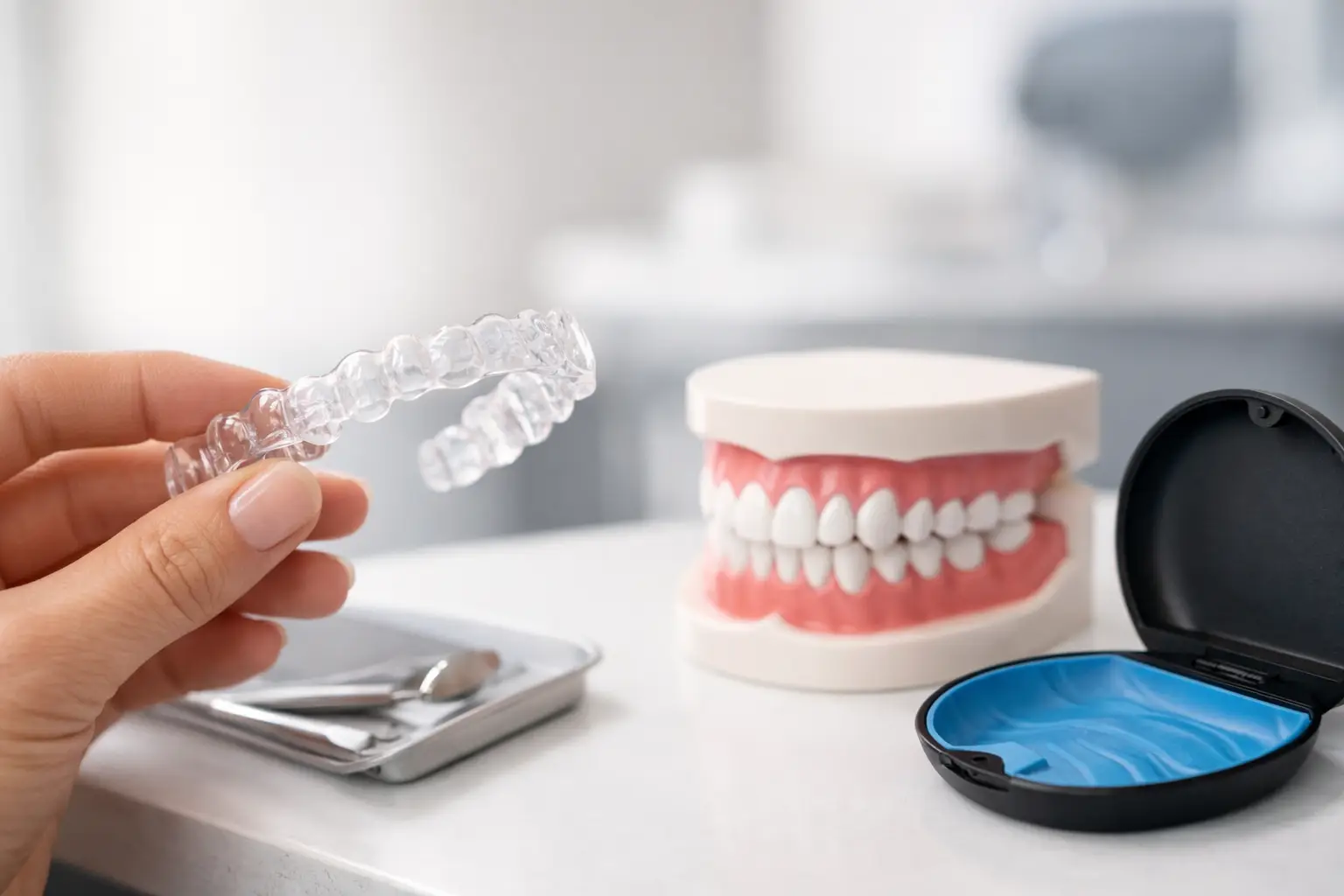
If you’ve been thinking about straightening your teeth but keep picturing brackets, wires, and frequent adjustments, Invisalign usually gets your attention for one simple reason – it looks easier to live with. A very common first question is how does Invisalign work, and the short answer is that it uses a series of custom clear aligners to gradually move your teeth into better positions over time.
That sounds simple, but the real value is in how controlled the process is. Each aligner is shaped to apply gentle pressure to specific teeth. You wear one set for a set period, then switch to the next set in the series. Little by little, your smile changes without the look and feel of traditional braces.
How does Invisalign work step by step?
Invisalign treatment starts with a consultation. Your dentist examines your teeth, bite, and overall oral health to see whether clear aligners are a good fit. This matters because Invisalign can do a lot, but it is not the right answer for every smile.
If you’re a candidate, digital scans or impressions are taken to create a precise 3D model of your teeth. From that model, a treatment plan is mapped out. It shows how your teeth are expected to move and how many aligners you’ll likely need.
Once your aligners are made, you wear them in sequence. Most patients wear each set for about one to two weeks, depending on the plan. The aligners need to stay in for around 20 to 22 hours a day, which means you take them out mainly for eating, drinking anything other than water, brushing, and flossing.
That wear time is what makes the system work. Invisalign is removable, but it only works as planned when it’s worn consistently. If aligners stay in their case more than they stay in your mouth, treatment usually slows down.
What actually moves your teeth?
Teeth are not stuck in place as rigidly as many people assume. They sit in bone and are supported by tissues that can respond to steady pressure. Invisalign aligners are designed to apply that pressure in small, controlled ways.
Each tray is slightly different from the last. When you put in a new aligner, it may feel snug because it is guiding certain teeth toward the next position. That pressure signals your body to remodel the bone around those teeth, allowing movement over time.
Some Invisalign plans also use small tooth-colored attachments bonded to certain teeth. These attachments give the aligners more grip and help create movements that would otherwise be harder to achieve, such as rotating a tooth or shifting it more precisely. They’re subtle, but they play a big role in many cases.
In some situations, your dentist may also recommend techniques like enamel shaping between teeth, sometimes called interproximal reduction. That sounds more intimidating than it is. It simply means creating a tiny bit of space so crowded teeth can move more predictably.
What Invisalign can fix and where it has limits
Invisalign can often treat mild to moderate crowding, spacing, overbites, underbites, crossbites, and crooked teeth. For many adults, it is a practical option because it improves alignment without changing daily life as dramatically as braces can.
That said, it depends on the complexity of the case. Some severe bite problems or more complicated tooth movements may still be better treated with braces or a different orthodontic approach. The best treatment is the one that gives you the safest, most reliable result, not the one that sounds most convenient.
This is why a proper exam matters. If you’ve had dental work like crowns, bridges, gum disease, or missing teeth, those details can affect planning. None of that automatically rules Invisalign out, but it does mean your treatment should be designed carefully.
What does Invisalign feel like day to day?
Most people are relieved to find that Invisalign is more manageable than they expected. There is usually some pressure when starting a new aligner, especially for the first day or two. That pressure is normal. It often feels more like tightness than pain.
Because there are no brackets or wires, many patients find Invisalign more comfortable overall. There can still be an adjustment period. You may notice a slight lisp at first, or you may become very aware of the trays for a few days. That usually improves quickly as your mouth gets used to them.
The biggest day-to-day change is routine. You need to remember to remove aligners before meals, clean your teeth before putting them back in, and keep track of wear time. If your schedule is busy, that can take some discipline. The trade-off for flexibility is responsibility.
Eating, drinking, and cleaning with Invisalign
One reason adults like Invisalign is that there are no food restrictions in the way braces often require. Since the aligners come out, you can still enjoy crunchy, chewy, or sticky foods. You just don’t eat with the trays in.
You should also avoid drinking coffee, tea, soda, juice, or wine while wearing them. These drinks can stain the aligners or increase the risk of trapping sugar and acid against your teeth. Water is the safe exception.
Oral hygiene tends to be easier with Invisalign than with braces because you can brush and floss normally. That said, you do need to stay on top of it. If you put aligners back over unbrushed teeth, you are basically holding plaque in place. For anyone already prone to cavities or gum irritation, that’s not a small detail.
How long does Invisalign take to work?
Treatment time varies. Some mild cases can be completed in a matter of months, while more involved treatment may take 12 to 18 months or longer. The biggest factors are the complexity of your case and how consistently you wear the aligners.
That second factor is worth repeating. Invisalign is designed around patient cooperation. If you wear the trays as directed, your teeth generally move according to plan. If you leave them out too often, progress can stall, refinements may be needed, and the total timeline can stretch.
Most patients have periodic check-ins so your dentist can monitor movement and make sure everything is tracking properly. These visits are usually simpler than the adjustment appointments people associate with braces, but they are still important.
Is Invisalign better than braces?
Sometimes yes, sometimes no. Invisalign is often better for adults who want a discreet appearance, more flexibility with meals, and an easier brushing and flossing routine. It can fit very well into professional and social settings where people prefer a lower-profile treatment.
Braces may still be the better option for certain complex cases or for patients who know they will struggle to wear removable aligners long enough each day. Since braces stay on, they don’t rely on the same level of daily compliance.
So the real question is not which one is better in general. It’s which one is better for your teeth, your schedule, and your habits.
Common concerns patients have before starting
Cost is one of the first questions most people ask, and understandably so. Invisalign pricing depends on how complex the case is and how long treatment is expected to take. In some offices, the cost can be similar to braces. What matters most is getting a clear breakdown of fees, insurance possibilities, and payment options so there are no surprises.
Another common concern is whether Invisalign is too noticeable. In real life, most people find the aligners far less obvious than they expected. They are not completely invisible, especially if attachments are used, but they are much more subtle than metal braces.
Patients with dental anxiety sometimes worry that orthodontic treatment will feel overwhelming. A calm, judgment-free consultation can make a big difference here. If you’ve been putting off treatment because you feel nervous or self-conscious about your teeth, you deserve a conversation that feels supportive, not pressured.
When is the best time to ask about Invisalign?
Usually, sooner than you think. You do not need to wait until your teeth get worse, and you do not need to have every answer before booking a consultation. If your teeth have shifted, your bite feels off, or you simply avoid smiling in photos, that is enough reason to ask.
At a practice like D on D Dental, the goal should be to help you understand your options clearly and comfortably. That means looking at your smile, talking honestly about whether Invisalign makes sense, and explaining the process in plain language.
A straighter smile is part of the benefit, but it’s not the whole story. When teeth are aligned more properly, cleaning can become easier, bite forces can be more balanced, and everyday confidence often changes in ways that feel bigger than expected. If you’ve been curious about Invisalign, a simple conversation is often the easiest first step.