A brighter smile sounds simple until you start reading labels, scrolling before-and-after photos, and wondering whether whitening could damage your teeth. If you have ever asked, is teeth whitening safe, the short answer is yes – for most people, when it is done properly and for the right reasons.
The longer answer matters more. Whitening is generally safe, but not every product is right for every smile. The condition of your teeth, your gums, your existing dental work, and even the kind of stains you have can all change the answer. That is why the safest approach is not just choosing the strongest product. It is choosing the right one.
Is teeth whitening safe for everyone?
Not always. Teeth whitening is considered safe for many healthy adults, but there are situations where it should be delayed, adjusted, or avoided.
If you have untreated cavities, exposed roots, cracked teeth, gum recession, or active gum disease, whitening can cause more sensitivity and irritation. It may not create an even result either. Whitening gel can reach areas that are already vulnerable, which tends to turn a cosmetic treatment into an uncomfortable one very quickly.
Pregnant or breastfeeding patients are often advised to postpone elective whitening as a precaution. It is also not usually recommended for children or young teens unless a dentist has evaluated the reason for discoloration and the stage of dental development.
Another common surprise is that whitening does not work on crowns, veneers, fillings, or bonding. If you have visible dental work in the front of your smile, your natural teeth may become lighter while those restorations stay the same shade. Safe treatment is not just about avoiding harm. It is also about avoiding disappointment.
How whitening works
Most whitening treatments use either hydrogen peroxide or carbamide peroxide. These ingredients break down stain molecules inside the enamel and dentin, making teeth appear lighter.
Used correctly, peroxide-based whitening does not “strip” enamel off the teeth. That is one of the biggest myths patients hear. What it can do, especially when overused or used incorrectly, is temporarily increase tooth sensitivity and irritate the gums.
This is where professional guidance makes a real difference. A dentist can help determine whether your stains are likely to respond to whitening at all. Yellow-toned teeth often respond better than gray, brown, or internally stained teeth caused by trauma, medication, or developmental changes.
Professional whitening vs over-the-counter products
Both professional and store-bought options can be safe, but they are not equal in fit, strength, or oversight.
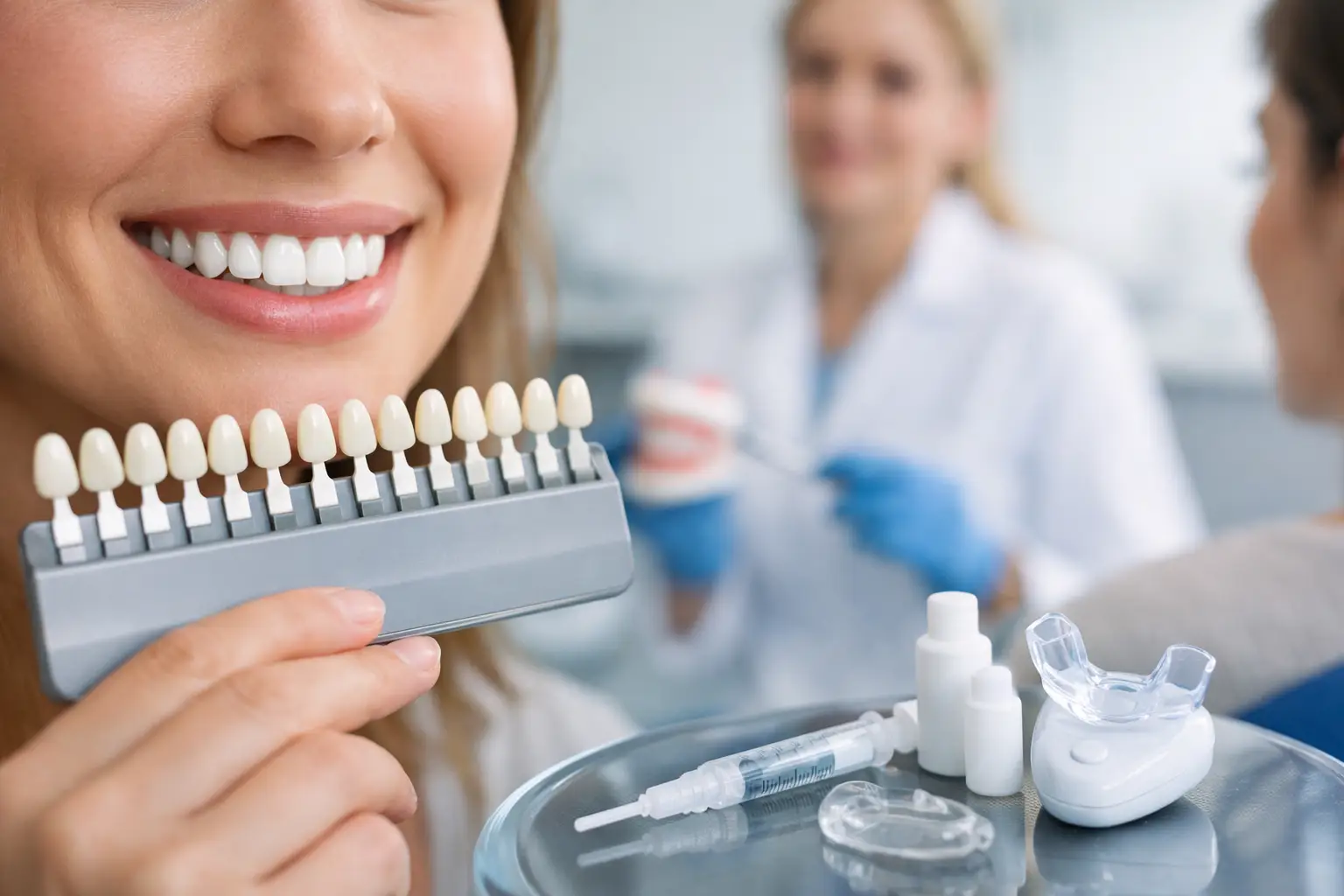
Professional whitening is usually the more predictable choice. Whether done in-office or with custom take-home trays, it starts with an exam. That means any decay, gum irritation, or dental work that could affect the outcome can be identified first. Custom trays also help keep the whitening gel where it belongs, reducing the chance of it sitting on the gums and causing irritation.
Over-the-counter strips, pens, and trays can be effective for mild staining, especially when the product is used exactly as directed. The catch is that one-size-fits-all systems are not always a great fit. A tray that leaks or a strip that slides onto the gumline can leave you with sore tissue and uneven results.
Whitening toothpastes are usually the mildest option. Most do not truly bleach the teeth. They tend to remove surface stains with polishing agents or low levels of active ingredients. That makes them useful for maintenance, but not ideal if you are hoping for a dramatic color change.
The most common side effects
The most common side effect is sensitivity. Teeth may feel zingy with cold air, cold drinks, or brushing for a day or two after treatment. This is usually temporary, but it can be intense for some people.
Gum irritation is the other issue dentists see often. This happens when whitening gel sits on the gums too long or when a tray does not fit properly. The tissue can look white, feel tender, or burn slightly, but it usually settles once the product is removed and treatment is paused.
In most cases, these side effects are short-lived. Still, short-lived does not mean harmless to ignore. If pain is strong, if one tooth hurts more than the others, or if sensitivity lingers, that can point to a deeper issue such as decay, a crack, or exposed dentin.
What helps reduce sensitivity
A few small adjustments can make whitening much easier on sensitive teeth. Shorter wear times, lower-concentration formulas, and spacing treatments farther apart often help. Many patients also do better when they use a toothpaste made for sensitivity for a week or two before and during whitening.
It is also wise to avoid the temptation to overdo it. More gel, longer wear, and back-to-back treatments do not always mean better results. They usually just mean more irritation.
When whitening can be unsafe
Whitening becomes less safe when people try to rush the process or use products not meant for teeth. That includes online trends, homemade mixtures, and abrasive DIY methods.
Lemon juice, baking soda scrubs, charcoal powders, and similar remedies may sound natural, but natural does not always mean gentle. Acidic or abrasive substances can wear enamel down over time, making teeth look more yellow, not less, and increasing sensitivity along the way.
Another problem is repeated whitening without a clear plan. Some people continue treating their teeth long after they have reached a healthy cosmetic result because they become focused on chasing a paper-white shade. Teeth are not meant to look fluorescent. Pushing beyond what is realistic can lead to chronic sensitivity and irritated gums.
Is teeth whitening safe if you have sensitive teeth?
It can be, but it depends on why your teeth are sensitive in the first place.
If your sensitivity is mild and occasional, whitening may still be possible with a gentler product or a slower schedule. If your sensitivity is tied to gum recession, enamel wear, cavities, clenching, or cracked teeth, whitening should wait until those issues are addressed.
This is where a calm, personalized dental visit can be genuinely helpful. Instead of guessing, you can find out whether your teeth are good candidates for whitening and what kind of treatment is least likely to trigger discomfort. For many patients, especially those who already feel nervous about dental care, having a clear plan makes the whole process feel much more manageable.
What a safer whitening plan looks like
A safer whitening plan starts with clean, healthy teeth. If plaque, tartar, cavities, or gum inflammation are present, those concerns should come first. Whitening works better on a healthy foundation and feels better too.
From there, the best treatment depends on your goals. If you want a noticeable improvement for an event or simply want the most even result possible, professional whitening is often the best choice. If your staining is mild and you prefer a gradual approach, a reputable over-the-counter option may be enough.
Either way, following directions matters. Use the recommended amount. Wear the product only for the stated time. Give your teeth a break if they become sensitive. And remember that coffee, tea, red wine, tobacco, and deeply pigmented foods can restain teeth after treatment, especially in the first day or two.
A quick word about expectations
Safe whitening is also realistic whitening. Teeth can look brighter, cleaner, and more refreshed, but they may not become perfectly uniform or ultra-white. Natural teeth vary in shade, and some discoloration runs deeper than surface staining.
That does not mean whitening failed. It means your smile is being treated like real teeth, not filtered photos.
When to talk to a dentist first
You should check with a dentist before whitening if you have tooth pain, gum bleeding, visible dental work in the front, severe sensitivity, dark single-tooth discoloration, or if you are unsure what caused the staining.
If you live in East Toronto and want a low-pressure place to ask those questions, D on D Dental takes a calm, judgment-free approach that helps patients feel informed instead of rushed. That kind of support matters when you are trying to make a cosmetic decision without second-guessing every step.
A whiter smile should feel like a confidence boost, not a risk. The safest path is the one that respects your comfort, your dental health, and the fact that good cosmetic care is never one-size-fits-all.