
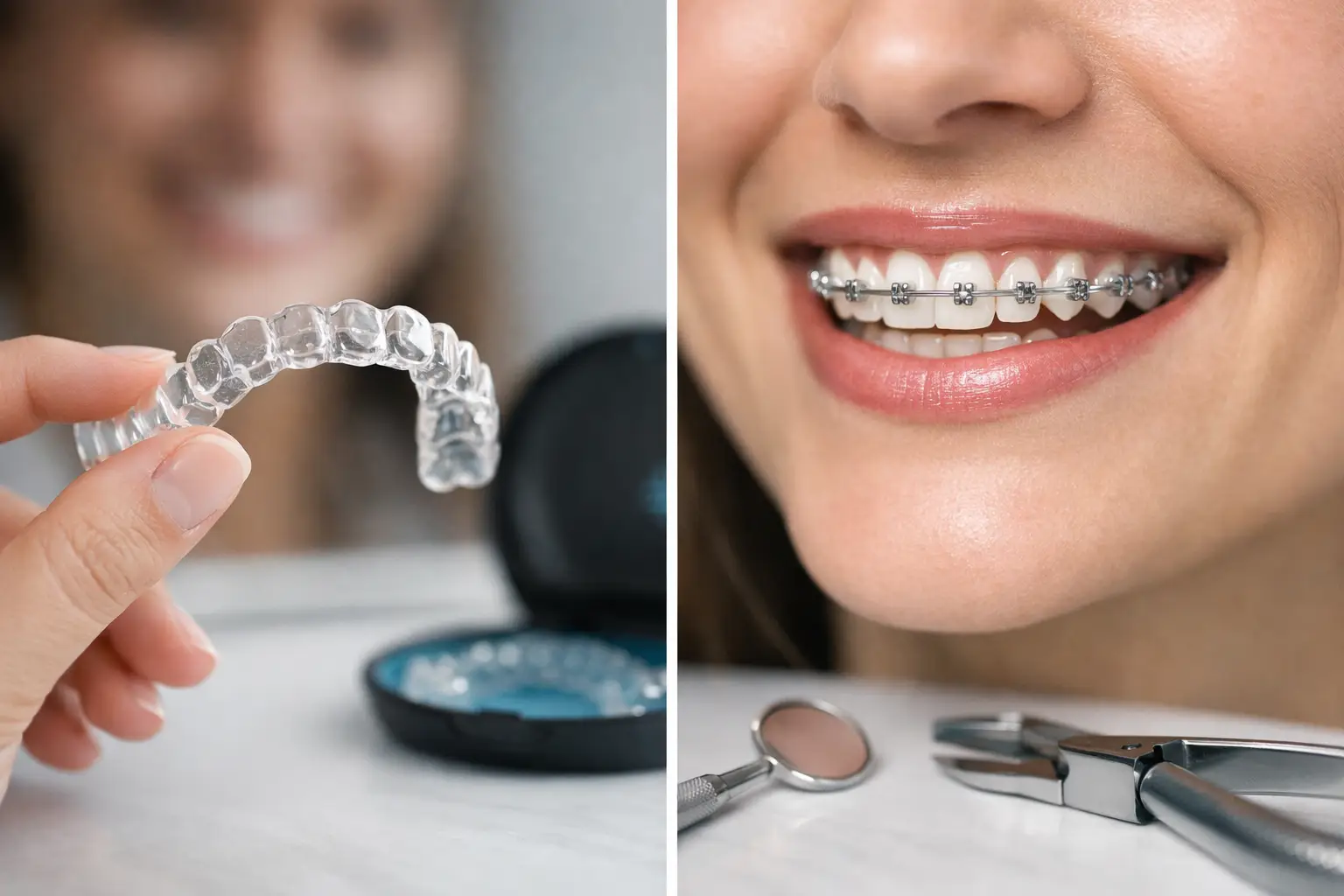
You may be ready to straighten your teeth, but not ready to feel like a teenager again. That is usually the real question behind invisalign vs braces adults are asking in a consult – not just which one works, but which one fits daily life, work, comfort, and budget.
For many adults, the answer is not as simple as “clear aligners look better” or “braces work faster.” Your bite, your schedule, your habits, and even your stress level around dental care can all affect which option feels manageable. A good orthodontic plan should improve your smile without making the process feel harder than it needs to be.
Invisalign vs braces for adults: what actually changes?
Both Invisalign and braces are designed to move teeth into better positions over time. Both can improve crowding, spacing, and many bite issues. The biggest difference is how that movement happens and what kind of day-to-day commitment each treatment asks from you.
Braces use brackets and wires attached to the teeth. They stay on full-time and are adjusted at regular visits. Invisalign uses a series of custom clear trays that fit over the teeth and are changed on schedule. The trays are removable, which gives adults more flexibility, but that flexibility comes with responsibility.
That is why one option is not automatically “better.” If you want something you do not have to remember to wear, braces may be easier. If appearance and removability matter most, Invisalign may feel like a much better fit.
Appearance and confidence at work or socially
This is often the first concern adults mention, and it is a valid one. Many people want orthodontic treatment but worry about how it will look in meetings, photos, dating, or everyday conversations.
Invisalign is usually the more discreet option. The trays are clear and less noticeable from a normal speaking distance. For adults in client-facing roles or anyone who feels self-conscious about metal braces, that can make it easier to start treatment sooner instead of putting it off.
Braces are more visible, even with smaller or more cosmetic bracket options. Some adults do not mind that at all. Others find that the appearance is a real barrier. There is no wrong reaction here. If you know visible appliances will make you hide your smile or avoid treatment, that matters.
At the same time, Invisalign is not invisible in every situation. Attachments, tray edges, and speech changes during the adjustment period can still be noticeable. Most adults adapt quickly, but it helps to have realistic expectations.
Comfort and daily convenience
Comfort is not only about pain. It is also about how treatment fits into meals, brushing, workdays, and sleep.
Braces can cause soreness after adjustments, and brackets may rub against the cheeks or lips. Some foods become frustrating or off-limits because they can break wires or damage brackets. Cleaning also takes more time. You need to work around the hardware carefully to reduce the risk of plaque buildup and gum irritation.
Invisalign trays can also create pressure and tenderness, especially when switching to a new set. But many adults find the smooth plastic trays easier on the soft tissues than brackets and wires. Because the trays come out, eating and brushing feel more normal.
Still, that convenience has a catch. You need to remove the trays before eating or drinking anything other than water, clean them regularly, and wear them consistently. If your job keeps you on the go, or you tend to snack, sip coffee all day, or forget routines, Invisalign can become more annoying than expected.
Invisalign vs braces adults should compare on discipline
This is the part many people underestimate. Invisalign only works well if you wear the trays as directed, usually 20 to 22 hours a day. That sounds manageable until real life gets involved.
If you travel often, work long shifts, attend frequent dinners, or know you are not great at sticking to routines, braces may actually be the lower-stress option. Since they stay on, there is less room for treatment to stall because of inconsistent wear.
On the other hand, adults who are organized and motivated often do very well with Invisalign. If you like having control, want fewer food restrictions, and are comfortable following instructions closely, aligners can feel simple and predictable.
There is no judgment in this decision. Choosing the treatment you are most likely to follow is usually smarter than choosing the one that sounds best on paper.
Which is better for complex tooth movement?
Many adults assume braces are always for severe cases and Invisalign is only for mild cosmetic changes. That used to be closer to the truth than it is now. Invisalign can treat many moderate and even fairly complex issues, depending on the case and the treatment plan.
That said, braces still offer advantages in certain situations. If there is significant bite correction needed, major tooth rotation, or movements that require very precise control, braces may be the more efficient option. Because they are fixed to the teeth, they give the dentist or orthodontic provider constant control over force and direction.
Invisalign can be very effective, but success depends heavily on good planning, patient compliance, and whether the specific tooth movements are well suited to aligners. This is one reason an in-person exam matters. Two adults with what looks like the same crowding may not be equally good candidates for the same treatment.
Treatment time and appointments
Adults often want to know which option is faster. The honest answer is that it depends on the complexity of your case and how well treatment is followed.
In some mild to moderate cases, Invisalign can be comparable to braces in treatment time. In other situations, braces may move things more efficiently. If aligners are not worn enough, treatment can drag on far beyond the original estimate.
Appointment style can also feel different. Braces need regular adjustment visits, and occasional emergency visits if a wire breaks or a bracket comes loose. Invisalign check-ins may feel simpler, although you still need monitoring to make sure teeth are tracking correctly.
For busy adults balancing work and family, convenience matters as much as total months in treatment. A plan that fits your schedule is often the one you will complete with less frustration.
Cost, insurance, and value
Cost is a real factor, especially for adults paying for their own treatment. Invisalign and braces can be priced similarly in some offices, while in others one may cost more depending on complexity and length of care.
Braces are sometimes the more budget-friendly option, but not always. Invisalign may carry a higher fee in some cases because of lab costs and digital treatment planning. The only reliable way to compare is to get a personalized estimate.
What matters most is understanding the full picture. Ask what is included, whether retainers are part of the fee, what happens if treatment takes longer than expected, and whether insurance can help. If payment plans are available, that can make either choice feel much more manageable.
A calm, judgment-free consultation should make room for these questions. You should not feel pressured to choose quickly or embarrassed to talk about finances.
Lifestyle factors adults should not ignore
A few small habits can make a big difference in which option feels easier.
If you drink coffee slowly throughout the day, braces may be less disruptive because Invisalign trays should be removed for anything other than water. If you play sports or grind your teeth, both options need special planning. If you have a history of gum disease, untreated cavities, or overdue dental work, those issues should be addressed before or alongside orthodontic treatment.
Adults also need to think beyond straight teeth. If you already have crowns, implants, or missing teeth, the treatment plan may need extra coordination. That does not mean orthodontic care is off the table. It just means the best option should support your overall oral health, not only appearance.
So, how do you choose?
If your top priorities are a discreet look, easier brushing, and food flexibility, Invisalign may be the better fit. If your case is more complex, you want a treatment that does not depend on remembering trays, or you prefer a fixed option, braces may make more sense.
The best choice is usually the one that balances three things: what your teeth need, what your routine allows, and what feels comfortable enough to stick with. That balance looks different for every adult.
If you have been putting this off because you are worried about pain, appearance, cost, or being judged for waiting so long, you are not alone. Many adults start orthodontic treatment later than they expected. What matters now is getting clear advice, asking honest questions, and choosing a plan that feels realistic for your life.
A straighter smile should feel like progress, not pressure. The right treatment is the one that helps you move forward with confidence and a little more ease.