
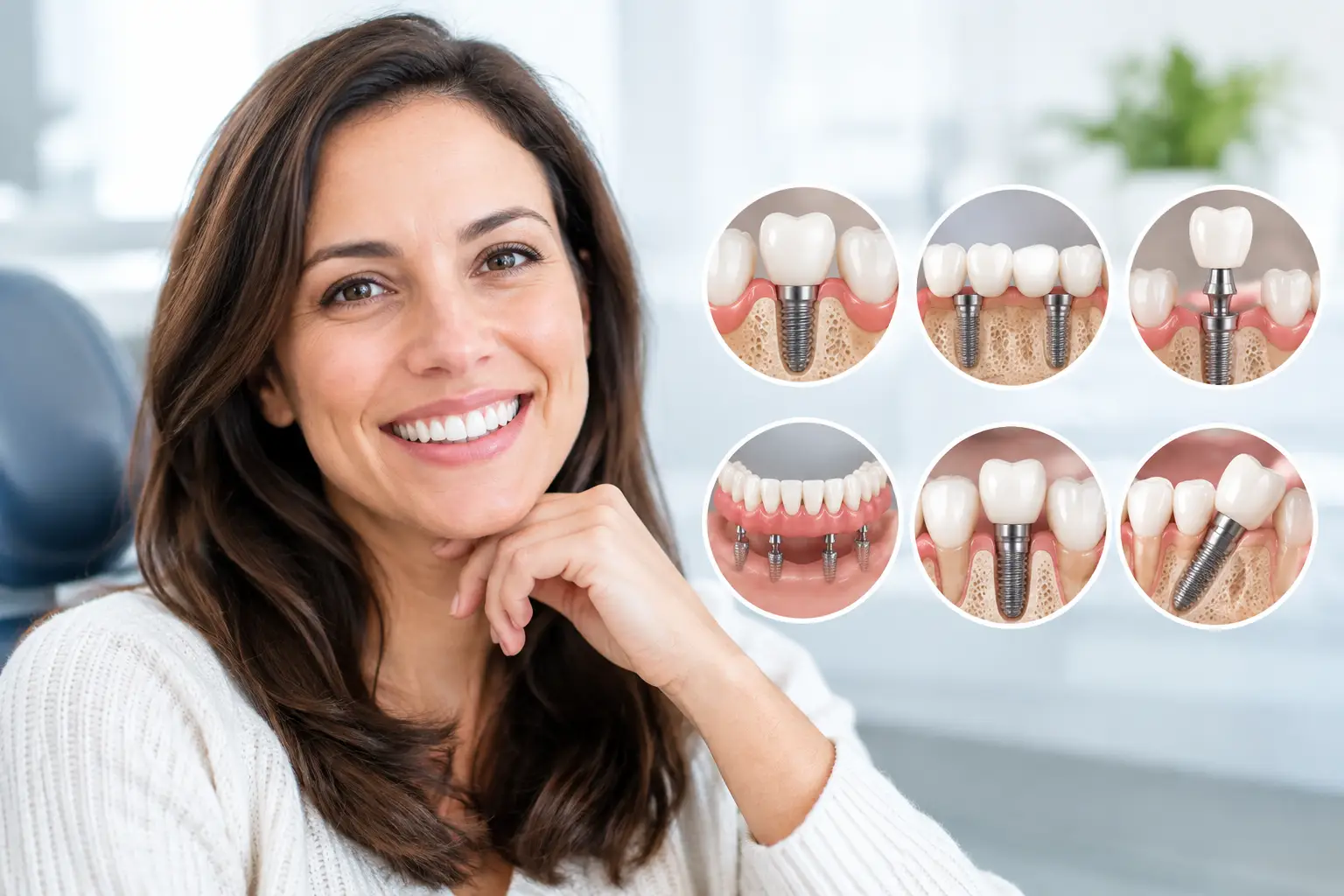
A missing tooth can change more than a photo. It can make chewing feel uneven, leave nearby teeth without support, or make you hesitate before smiling. These implant treatment examples show how dental implants can be adapted to different needs, from replacing one visible tooth to stabilizing a loose denture. The right choice depends on your health, bone support, bite, goals, and budget – not on a one-size-fits-all plan.
A dental implant is a small post placed in the jawbone to act like a tooth root. Once it has healed and bonded with the bone, it can support a crown, bridge, or denture. Care is planned carefully and at a pace that feels manageable, especially if dental visits have felt stressful in the past.
Implant treatment examples for common situations
1. Replacing one missing tooth with an implant crown
If you are missing one tooth, an implant topped with a custom crown is often a strong, natural-looking option. This is common for a front tooth lost through injury, as well as a back tooth removed because of deep decay or a fracture.
The implant replaces the root below the gumline, while the crown replaces the part you see and chew with. Unlike a traditional bridge, this approach does not require reshaping the healthy teeth on either side of the space. That can be a meaningful advantage when those neighboring teeth are in good condition.
The trade-off is time. Implant treatment usually involves a healing period before the final crown is placed. In some cases, a temporary tooth can be used while the area heals, particularly when appearance is a concern. Your dentist will also check whether the bone at the extraction site is strong enough or whether grafting may help create a better foundation.
2. Replacing several missing teeth with an implant-supported bridge
When two or more teeth in a row are missing, you may not need one implant for every tooth. An implant-supported bridge uses implants at strategic points to hold several replacement teeth together. For example, two implants may support a bridge replacing three missing teeth.
This option can restore a larger section of your bite while avoiding the need for a removable partial denture. Because the bridge is supported by implants rather than natural teeth, it does not place extra pressure on the remaining teeth beside the gap.
An implant-supported bridge can be a good fit when the missing teeth are grouped together and there is enough healthy bone where the implants will be placed. It is not automatically the best answer for every gap, though. The position of your sinuses, nerves, existing teeth, gum health, and how you bite all influence the plan.
3. Securing a lower denture that moves around
A lower denture can be especially frustrating because it may shift while you talk or eat. Implant-retained dentures are designed to improve stability. Usually, a small number of implants are placed in the lower jaw, and the denture attaches to them with a secure connection.
The denture remains removable for cleaning, but it has much more resistance to lifting or sliding than a conventional denture. Many patients find that this makes meals, conversations, and social situations feel less demanding.
This treatment is often more accessible than a full fixed implant bridge because it uses fewer implants. It still requires regular home care and professional checkups. The attachments and denture itself can wear over time, so they may need maintenance. Clear instructions and no-surprises financial guidance are part of making that decision with confidence.
4. Replacing a full arch with a fixed implant bridge
For someone missing all upper or lower teeth, or facing the removal of teeth that cannot be saved, a full-arch fixed bridge may be considered. Several implants are placed across the jaw to support a full set of replacement teeth that stays in place.
Unlike a removable denture, a fixed bridge is only removed by a dental professional. It can feel more similar to having natural teeth because it is stable for speaking and eating. It also requires dedicated cleaning around and beneath the bridge, often with special brushes or flossing tools.
This is a more complex treatment with a larger financial commitment. Some patients need extra procedures, such as bone grafting or tooth removal, before implants can be placed. Others may be candidates for a temporary fixed bridge soon after implant placement. The timing varies widely, so a consultation should focus on your specific mouth rather than promises of a standard timeline.
5. Replacing teeth after an extraction
Sometimes implant planning begins before a tooth is removed. If a tooth is severely infected, cracked below the gumline, or too damaged to restore, your dentist may discuss extraction followed by an implant.
In selected cases, an implant can be placed at the same appointment as the extraction. In other cases, the site needs time to heal first. A bone graft may be placed at the time of extraction to help preserve the shape of the jawbone for a future implant.
Immediate placement can reduce the number of surgical visits, but it is not always the safest option. Infection, bone quality, the location of the tooth, and the ability to achieve stability all matter. A careful plan protects the long-term result better than rushing into treatment.
6. Updating an older bridge or denture
Implants may also be an option for people who already have replacement teeth but are unhappy with how they function. A traditional bridge may need replacement after years of use, or a removable partial denture may feel uncomfortable and difficult to manage. Depending on the condition of the supporting teeth and gums, implants may offer a different path forward.
This does not mean every older restoration should be replaced with implants. If a bridge is healthy, functional, and comfortable, maintaining it may be the most sensible choice. If it is failing or no longer serving you well, an exam can clarify whether an implant-supported restoration is possible and worthwhile.
What happens before implant treatment?
Implant dentistry starts with planning, not surgery. Your dental team will review your medical history, medications, gum health, bite, and the condition of your remaining teeth. X-rays and three-dimensional imaging may be used to assess bone volume and map out safe implant placement.
Good candidates do not need to have perfect teeth. However, active gum disease and untreated decay should be addressed first. Smoking, uncontrolled diabetes, certain medications, and teeth grinding can affect healing or long-term success. None of these factors automatically rule out implants, but they deserve an honest conversation and, sometimes, extra precautions.
If anxiety has kept you away from dental care, say so early. A calm, judgment-free approach can make a major difference. Appointments can be explained step by step, treatment can be phased when appropriate, and sedation options may be available for patients who need additional help feeling comfortable.
Healing, care, and realistic expectations
After placement, the implant needs time to bond with the jawbone. Healing may take several months, although the exact timeline depends on the treatment area and whether additional procedures were needed. Mild soreness and swelling are common after surgery, and your care team will give you instructions for eating, cleaning, and managing discomfort.
Once restored, an implant is cared for much like natural teeth: brush thoroughly, clean between teeth or around the restoration, and keep regular dental visits. Implants cannot get cavities, but the gums and bone around them can still develop infection. Consistent home care and professional maintenance are essential.
Cost also varies with the number of implants, the restoration type, imaging, extractions, grafting, and sedation needs. Asking for a written treatment plan helps you understand what is included. If cost is a concern, ask about insurance support, payment options, and whether treatment can be completed in stages.
The best implant treatment is the one that restores comfort and function without asking you to ignore your health, concerns, or finances. A consultation at D on D Dental can turn the options from abstract examples into a clear, personal plan – with gentle guidance at every step.