
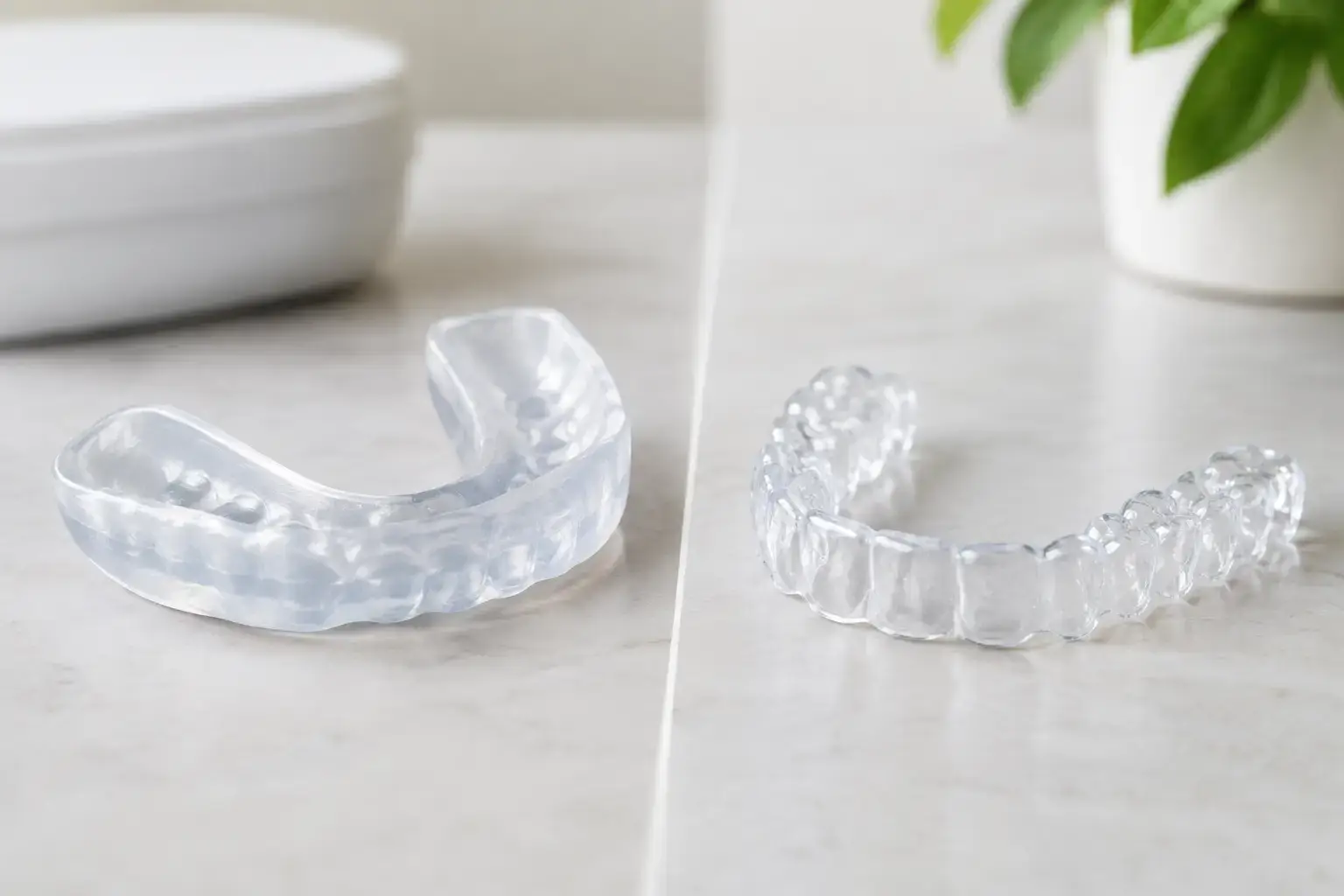
You open the case beside your bed and see a clear plastic appliance. It may look simple, but using the wrong one can lead to a sore jaw, shifting teeth, or a damaged appliance. The question of night guard versus retainer comes up often because the two can look similar, especially when both are clear and removable. Their jobs, however, are very different.
A retainer is designed to hold teeth in position after orthodontic treatment. A night guard is designed to protect teeth and dental work from the pressure of grinding or clenching. Some people genuinely need both. The right answer depends on what is happening with your teeth, bite, jaw, and sleep habits.
Night Guard Versus Retainer: The Core Difference
Think of a retainer as a parking spot for your teeth. After braces or clear aligners move teeth into a healthier position, the bone and surrounding tissues need time to stabilize. A retainer helps prevent teeth from drifting back toward where they started.
A night guard, also called an occlusal guard, creates a protective barrier between your upper and lower teeth. It helps reduce the damage caused by bruxism, the habit of grinding or clenching teeth. Many people grind during sleep without realizing it. Others clench while working, driving, exercising, or dealing with stress.
Both appliances are custom-made to fit your mouth, but the materials, thickness, and bite design are based on different goals. A retainer prioritizes tooth position. A night guard prioritizes bite protection and pressure distribution.
What a Retainer Does
Retainers are commonly worn after braces or Invisalign treatment, but they are not only for teenagers. Teeth can shift at any age. Changes in bite, missing teeth, aging, gum health, and natural pressure from chewing can all contribute to movement over time.
Clear retainers are often made from a thinner plastic that fits closely around the teeth. Hawley retainers use acrylic and a wire across the front teeth. Your dentist or orthodontist may recommend full-time wear at first, followed by nighttime wear for long-term maintenance. The schedule is personal, so it is best not to assume that a friend’s routine will work for you.
A retainer may also be used to hold space after certain dental treatments or to maintain the results of orthodontic care. If it no longer fits comfortably, do not force it into place. That can put unwanted pressure on your teeth and may crack the retainer.
What a Night Guard Does
A custom night guard is generally stronger and thicker than a clear retainer. It is made to withstand the repeated force of clenching and grinding while helping keep your teeth from wearing directly against each other.
Without protection, grinding can flatten or chip teeth, crack fillings and crowns, increase tooth sensitivity, and strain the jaw muscles. Some people wake with headaches, facial soreness, tightness near the temples, or a tired jaw. Others notice that their teeth look shorter or have small cracks near the gumline.
A night guard is not a cure for the cause of grinding. Stress, sleep habits, medications, bite changes, and sleep-disordered breathing can all play a role. Still, it can be an effective part of protecting your teeth while your dentist looks at the bigger picture.
Can You Use a Retainer as a Night Guard?
Sometimes a clear retainer may offer limited protection, but it should not automatically be treated as a night guard. A thin retainer can wear through, crack, or distort under strong grinding forces. It may also fail to manage how your teeth come together, which matters when your jaw is under pressure night after night.
There are situations where one appliance can be designed to serve more than one purpose. For example, a dentist may create a durable appliance that helps maintain tooth position while accounting for a patient’s grinding habit. This should be a clinical decision, not a do-it-yourself substitution.
If you have completed orthodontic treatment and have started grinding, bring your retainer to your appointment. Your dentist can check for scratches, holes, cracks, bite marks, or changes in fit. These details can reveal more than you might expect.
How to Tell Which One You May Need
Your symptoms and dental history offer useful clues. A retainer may be the priority if you had braces or aligners and notice that your teeth have shifted, your old retainer feels tight, or gaps and crowding are returning.
A night guard may be more appropriate if you wake with jaw soreness or headaches, your partner hears grinding at night, or your dentist sees worn enamel, chipped teeth, damaged restorations, or tension in your jaw muscles. You may not feel pain at all. Tooth wear is often gradual, which is one reason routine exams matter.
If you have both orthodontic history and signs of grinding, do not choose based on appearance alone. A custom assessment can determine whether you need a separate retainer and guard, a specially designed combination appliance, or another approach.
Why Store-Bought Guards Are Not Always Enough
Over-the-counter boil-and-bite guards are easy to find and can seem like a quick solution. They may be helpful as a short-term option in some situations, but they are not the same as a professionally fitted guard.
A bulky or poorly fitting guard can feel uncomfortable, make it harder to sleep, or encourage you to clench more. It can also alter the way your teeth meet if it is worn regularly without professional guidance. For people with crowns, implants, gum concerns, jaw pain, or a changing bite, a custom appliance offers more precise protection.
A custom guard is made from impressions or a digital scan of your teeth. Your dentist can adjust the fit and bite so the appliance feels secure and works with your individual smile. That attention can make a real difference in comfort and long-term use.
Caring for Your Appliance
Whether you wear a retainer, a night guard, or both, simple daily care helps protect your oral health and extends the life of the appliance. Rinse it with cool water after use, gently brush it with a soft toothbrush, and let it dry before placing it in its case. Hot water can warp many plastics, so skip it.
Avoid using abrasive toothpaste, bleach, or harsh cleaners unless your dental team has specifically recommended a product. These can scratch the surface or damage the material. Clean the case regularly, too. A clean appliance stored in a dirty case is not truly clean.
Bring your appliance to regular dental visits. Your dentist can inspect it for wear and confirm that it still fits correctly. A guard with deep grooves or a retainer that has become loose may need to be replaced.
When to Call Your Dentist
Do not wait if your appliance suddenly feels painful, cracks, causes your bite to feel different, or no longer stays in place. You should also schedule an exam if you have new jaw pain, frequent headaches, broken teeth, sensitivity, or a retainer that no longer fits.
For patients who feel nervous about dental visits, these concerns do not need to become another source of stress. A calm, judgment-free appointment can start with a conversation about what you have noticed and what feels comfortable for you. At D on D Dental, your dentist can examine your teeth, jaw, and current appliance, then explain your options clearly before moving forward.
Your nighttime appliance should feel like support, not another thing to worry about. If you are unsure whether you need a retainer, a night guard, or a plan that includes both, a personalized dental exam can give you a clear path forward and help keep your smile protected.