Losing teeth changes more than your smile. It can affect how you eat, how clearly you speak, and how confident you feel in everyday moments. When patients ask about dental implants versus dentures, they are usually not looking for a sales pitch. They want an honest answer about comfort, cost, appearance, and what daily life will actually feel like.
That is the right place to start, because there is no one-size-fits-all solution. Both options can restore missing teeth. Both can improve function and appearance. But they work in very different ways, and the better choice often comes down to your bone health, budget, timeline, and personal comfort level.
Dental implants versus dentures: the core difference
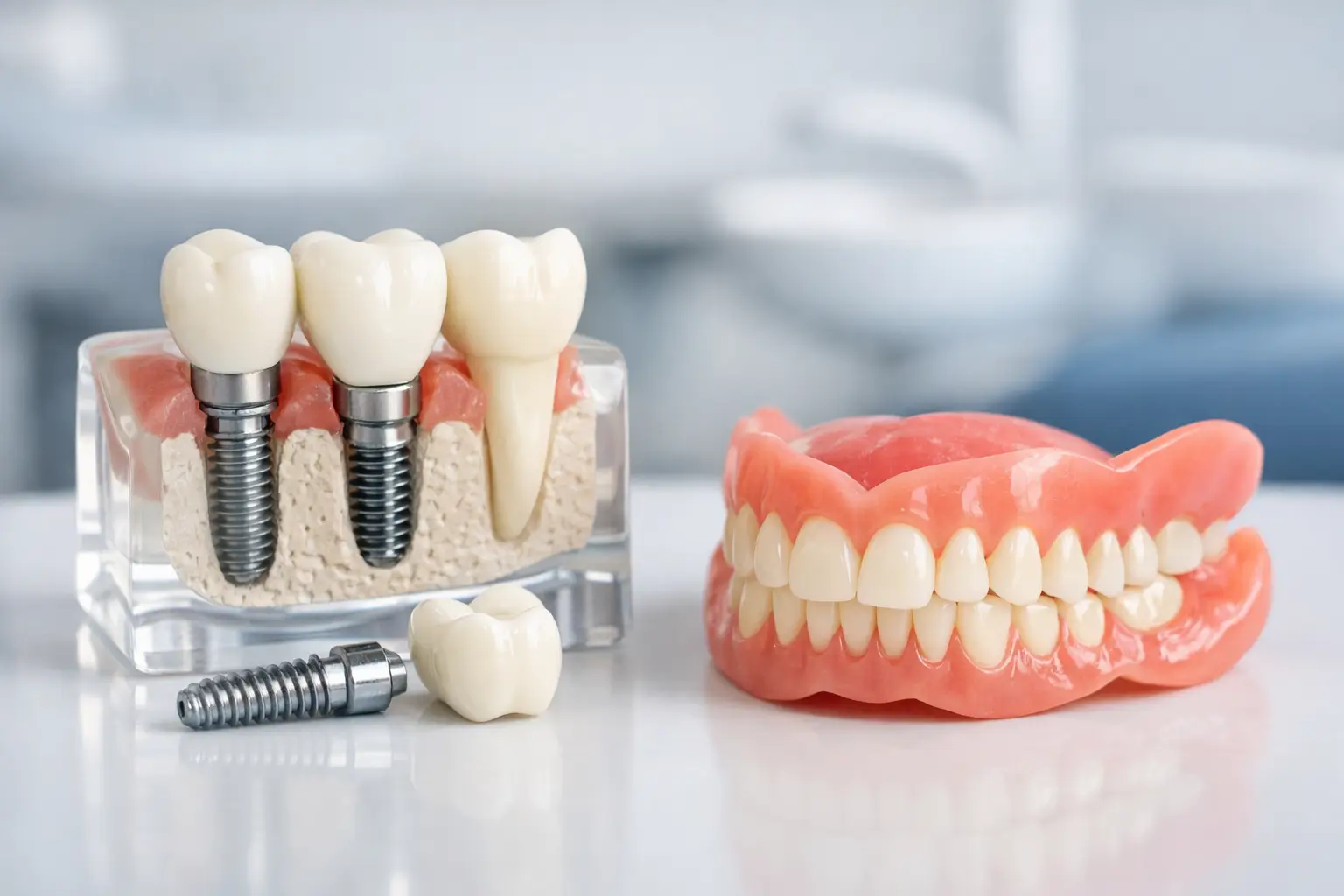
Dentures are removable replacements for missing teeth. They sit on top of the gums and can replace a few teeth or a full arch. Traditional full dentures are usually taken out at night and cleaned outside the mouth.
Dental implants are small titanium posts placed in the jawbone to act like artificial tooth roots. Once they heal, they can support crowns, bridges, or implant-supported dentures. Because they are anchored in the bone, they generally feel more stable than removable dentures.
That stability is often the biggest dividing line in the dental implants versus dentures conversation. Dentures can restore a smile quickly and at a lower upfront cost, while implants usually offer a more secure, long-term feel.
How they feel in daily life
This is where the differences become very real.
Traditional dentures can work well, especially when they are properly fitted, but they may still shift slightly while eating or speaking. Some patients adjust quickly. Others find the movement frustrating, especially with lower dentures, which tend to be less stable than upper ones. Dentures can also create pressure points over time, leading to sore spots that need adjustments.
Implants usually feel closer to natural teeth because they are fixed in place. You do not need adhesive, and you do not have to worry as much about slipping during meals or conversations. Many patients say the biggest benefit is confidence. They stop thinking about their teeth all the time.
That said, implants do involve surgery and healing time. If the idea of oral surgery makes you nervous, that concern matters. A calm, supportive dental team can make the process much easier, but it is still a more involved treatment than getting a removable denture.
Appearance and facial support
Both dentures and implants can look very natural when they are well designed. Modern dentistry has come a long way, and a good restoration should suit your face, smile, and bite.
Dentures can also help support the lips and cheeks, which is especially important after multiple tooth loss. However, because dentures rest on the gums, the fit can change as the jawbone shrinks over time. That change may affect both appearance and comfort.
Implants help stimulate the bone, much like natural tooth roots do. This can reduce the rate of bone loss in the jaw. Over the long term, that support often helps preserve facial structure better than traditional dentures alone.
If appearance is a major priority, the answer is not always simply implants. A well-made denture can still provide a very attractive result. But if you are looking for the most natural feel and long-term support for the jaw, implants often have the edge.
Cost: upfront versus long-term value
Cost is one of the biggest reasons people hesitate, and it is completely reasonable to weigh it carefully.
Dentures usually cost less upfront than implants. If you need to replace many teeth and want a faster, more budget-friendly option, dentures may be the most practical starting point. For some patients, that is the deciding factor.
Implants typically cost more because they involve surgical placement, healing time, and custom restorations. In some cases, bone grafting or other preparatory treatment is also needed, which adds to the total.
Still, upfront cost is not the whole story. Dentures may need relines, adjustments, repairs, or replacement over time as the mouth changes. Implants also require maintenance, but they are generally considered a longer-term investment.
For many patients, the best question is not just Which costs less today? It is Which option fits my life, my priorities, and my budget over the next several years?
Eating, speaking, and confidence
If you have been living with missing teeth, you may already know how much function matters.
Dentures can improve chewing and speech significantly compared with having no replacement at all. But some foods may still be difficult, especially anything hard, sticky, or crunchy. New denture wearers often need time to relearn certain sounds and get used to the feeling of a removable appliance.
Implants generally provide stronger biting force and greater stability. That often makes it easier to eat a wider variety of foods and speak without self-consciousness. For patients who want the closest experience to natural teeth, this can be a major benefit.
There is also a middle ground worth mentioning. Implant-supported dentures combine features of both options. They are more secure than traditional dentures because they snap onto implants, but they may cost less than replacing every missing tooth with individual implants. For some people, this is the most balanced solution.
Maintenance and daily care
Dentures need consistent cleaning, just like natural teeth do. They should be removed, brushed carefully, and soaked as directed. The gums and any remaining teeth also need regular care. Even with full dentures, routine dental visits still matter.
Implants are not maintenance-free either. You still need to brush, floss, and keep up with professional cleanings. The difference is that the routine often feels more similar to caring for natural teeth, especially with fixed implant restorations.
If you want something removable and simple to take out for cleaning, dentures may appeal to you. If you prefer something that stays in place and feels more like part of your mouth, implants may be the better fit.
Who may be a better candidate for dentures
Dentures may make more sense if you are missing many teeth, want a lower upfront cost, or need a faster treatment option. They can also be a strong choice for patients who are not ready for surgery or who have medical or bone-related limitations that make implants less suitable.
This does not mean dentures are a lesser option. For many people, they provide real relief, restored appearance, and dependable function. What matters most is that they are well made, properly fitted, and supported with follow-up care.
Who may be a better candidate for implants
Implants may be a better option if you want maximum stability, strong chewing ability, and a solution that helps preserve bone over time. They are often especially appealing to patients who are tired of loose appliances or who want a replacement that feels more natural day to day.
Good candidates generally need healthy gums and enough bone to support the implant, although some patients can still qualify after bone grafting or other preparatory treatment. A full exam and imaging are the only reliable way to know.
If you are anxious about treatment, it helps to choose a dental office that takes a calm, judgment-free approach and explains each step clearly. For many patients, the fear of the unknown is harder than the treatment itself.
Dental implants versus dentures: what matters most
The best choice is often the one that fits your real life, not an idealized version of it. If budget, speed, and simplicity are your top concerns, dentures may be the right path. If long-term stability, comfort, and bone support matter most, implants may be worth the added investment.
And if you are somewhere in the middle, implant-supported dentures may offer the balance you are looking for.
A thoughtful consultation should never feel rushed or pressured. It should leave you understanding your options, your costs, your timeline, and what kind of result you can realistically expect. That kind of clarity matters just as much as the treatment itself.
If you are weighing dental implants versus dentures, give yourself permission to ask practical questions and personal ones too. How do you want to eat, speak, clean your teeth, and feel when you smile? The right answer is the one that helps you move forward with comfort and confidence.