
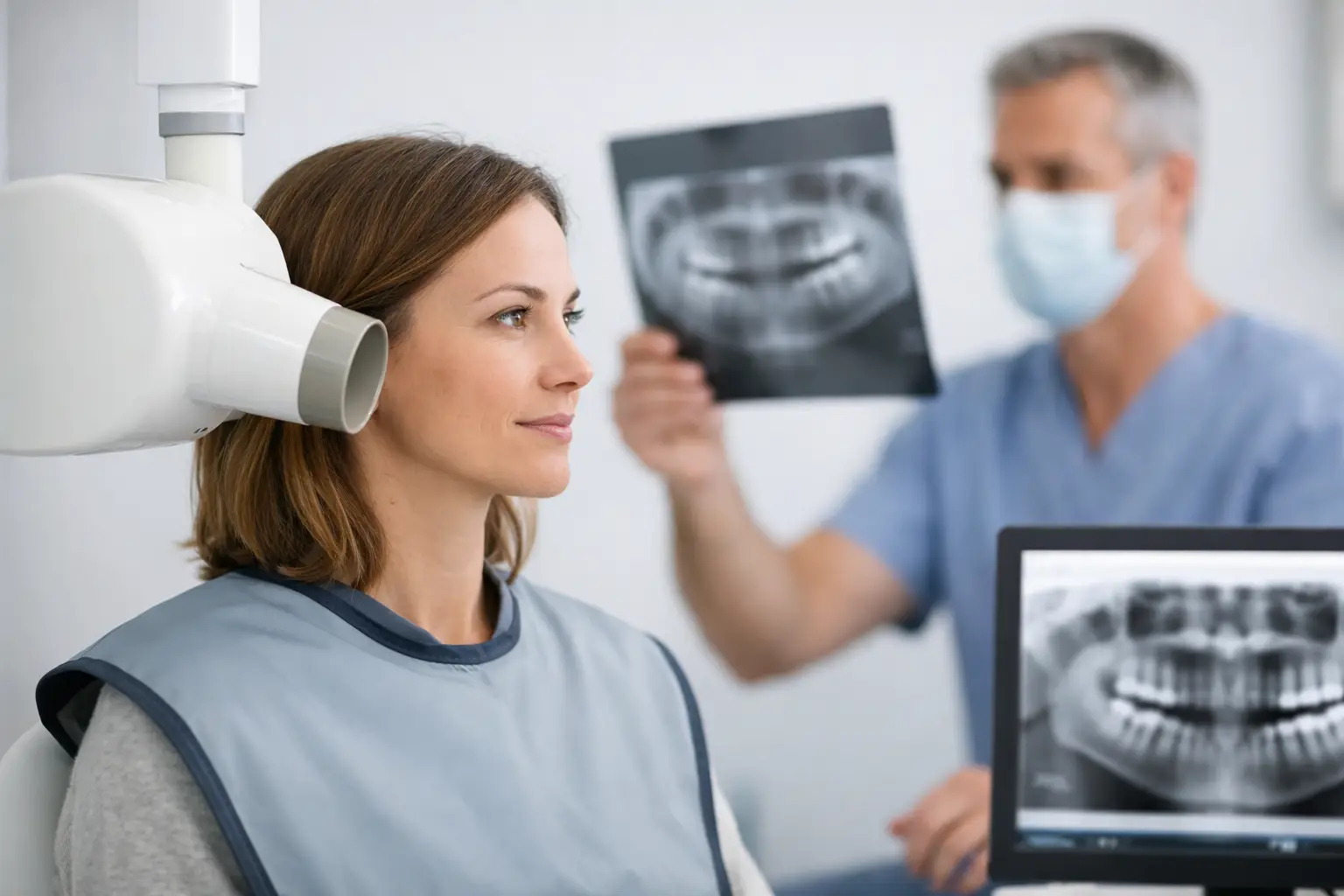
A tooth can look perfectly healthy from the outside while a cavity is forming between it and the next tooth, or an infection is developing beneath an old filling. That is why patients often ask, are dental x rays safe? It is a fair question, especially if dental visits already bring anxiety.
For most patients, the answer is yes. Modern dental X-rays use very low doses of radiation, and they are taken only when they can help your dentist make a better decision about your care. The goal is not to take images routinely just because it is time. It is to find problems that cannot be seen during a visual exam, while keeping your exposure as low as reasonably possible.
Are Dental X Rays Safe? The Short Answer
Dental X-rays are considered safe when they are clinically necessary and performed with appropriate safety practices. Digital imaging has reduced radiation exposure compared with older film-based methods, and dental teams use focused equipment, careful positioning, and protective measures to limit unnecessary exposure.
Radiation is part of everyday life. We receive small amounts from natural sources such as the ground, air, food, and even a flight at high altitude. A dental X-ray adds a small, controlled amount. The exact dose varies based on the type of image, the equipment used, and the area being examined, but a standard digital dental image is very low-dose.
That does not mean X-rays should be taken without a reason. Good dental care is about balance. Your dentist weighs the small radiation exposure against the risk of missing decay, bone loss, infection, impacted teeth, or other concerns that may become more complicated and costly if left untreated.
Why a Visual Exam Is Not Always Enough
During an exam, your dentist can see the surfaces of your teeth, gums, tongue, and other visible areas of your mouth. But many dental problems begin where the eye cannot easily reach.
Bitewing X-rays can reveal cavities between teeth and help monitor changes around existing fillings or crowns. Periapical X-rays show an entire tooth, including its root and the bone around it, which can be especially helpful when a tooth is painful or an infection is suspected. A panoramic X-ray provides a broad view of the teeth, jaw, sinuses, and developing or impacted wisdom teeth.
In some situations, a 3D scan called cone beam computed tomography, or CBCT, may be recommended for more detailed planning. This type of imaging generally involves more radiation than standard dental X-rays, so it is not used for every patient or every appointment. It can be valuable when planning implants, evaluating complex root anatomy, assessing certain jaw concerns, or preparing for surgical treatment.
The right image depends on your history and symptoms. If you have a new toothache, gum disease, a history of frequent cavities, or a treatment plan that requires more detail, X-rays may be especially useful. If you have had recent images and no new concerns, your dentist may not need to repeat them.
How Dentists Keep Radiation Exposure Low
Dental teams follow a simple principle: use the lowest exposure needed to obtain a useful diagnostic image. This approach means images are prescribed based on your individual needs, not automatically on a one-size-fits-all schedule.
Several practical safeguards make a difference. Digital sensors are highly sensitive and typically need less radiation than traditional film. The X-ray beam is aimed only at the area being examined, and the equipment is designed to limit scatter. Your dental team also reviews available recent images before taking new ones, so useful records are not unnecessarily duplicated.
Protective shielding may also be used based on the type of image and office protocol. If you have questions about the equipment, the image being recommended, or the steps being taken to protect you, please ask. A calm, judgment-free conversation is part of safe care.
How Often Do You Need Dental X-Rays?
There is no single schedule that is right for everyone. A child with a high risk of cavities may need images more often than an adult with excellent oral health and no history of decay. Someone with crowns, implants, gum disease, or frequent restorative treatment may also need closer monitoring.
Your dentist considers factors such as your age, dental history, current symptoms, gum health, risk of cavities, and how long it has been since your last usable X-rays. New patients may need updated images if previous records are unavailable or do not show the areas that need evaluation. But if you bring recent X-rays from another office and they are clear enough for diagnosis, they may reduce the need for retaking images.
It is reasonable to ask why an X-ray is recommended and what your dentist is looking for. You deserve a straightforward answer, whether the concern is a possible cavity, a painful tooth, changes in bone support, or preparation for treatment.
Dental X-Rays for Children
X-rays can be particularly helpful for children because their teeth and jaws change quickly. Images can show cavities between baby teeth, monitor how adult teeth are developing, and identify concerns such as crowding, missing teeth, or teeth that are not erupting as expected.
Children are not given X-rays simply because they are at the dentist. The same individualized approach applies: images are recommended when the expected benefit outweighs the small exposure. Proper positioning and child-sized settings help keep the process efficient and comfortable.
For parents, the bigger risk is often an undetected cavity that grows quietly until it causes pain, infection, or a more involved treatment need. Finding issues early can mean simpler care and a less stressful experience for your child.
What if You Are Pregnant or Think You Might Be?
Tell your dentist if you are pregnant or think there is a possibility you could be. Necessary dental X-rays can generally be performed during pregnancy with appropriate precautions, especially when evaluating pain, infection, swelling, or an urgent treatment need.
Delaying care for a serious dental infection is not always the safer choice. Your dentist can discuss whether imaging is needed now, whether it can wait, and what protective steps will be used. This is a good time to be open about your concerns so the plan feels clear and comfortable.
When It Makes Sense to Speak Up
You do not need to simply accept an X-ray recommendation without understanding it. A trustworthy dental team should welcome your questions and explain the purpose in plain language.
You might ask what the image will help diagnose, whether recent X-rays can be used, what type of X-ray is being recommended, and whether there is another way to assess the concern. These questions are not difficult or inconvenient. They help you participate in decisions about your health.
If you feel nervous about the process itself, let the team know before the image is taken. Some patients worry about gagging on sensors, being positioned incorrectly, or not knowing what to expect. A gentle team can slow down, explain each step, and make adjustments where possible. At D on D Dental, comfort-first care means giving patients room to ask questions without pressure or judgment.
A Small Image Can Prevent a Bigger Problem
Dental X-rays are not a replacement for regular exams, good brushing, flossing, or honest conversations about changes in your mouth. They are one helpful tool that lets your dentist see beyond the surface and address concerns early.
If an X-ray has been recommended, asking why is always welcome. Once you understand what your dentist is checking for and how the image supports your care, the appointment can feel less like an unknown and more like one practical step toward protecting your smile.