
A denture that feels clean, comfortable, and secure can make meals, conversations, and everyday smiling feel much easier. Knowing how to care for dentures protects more than the appliance itself – it also helps protect your gums, remaining natural teeth, and overall oral health. A simple routine is usually all it takes, and it can prevent many of the stains, odors, sore spots, and breakages that make dentures frustrating.
Clean Dentures Every Day
Dentures collect food particles, plaque, and bacteria just as natural teeth do. Even if you wear full dentures and no longer have natural teeth, daily cleaning still matters. It helps keep your breath fresh, reduces the chance of gum irritation, and prevents buildup that can make your dentures look dull or feel less comfortable.
Remove your dentures and rinse them under cool or lukewarm running water after meals when possible. This washes away loose food before it has a chance to dry onto the surface. Be gentle near clips, clasps, or other attachments if you wear a partial denture.
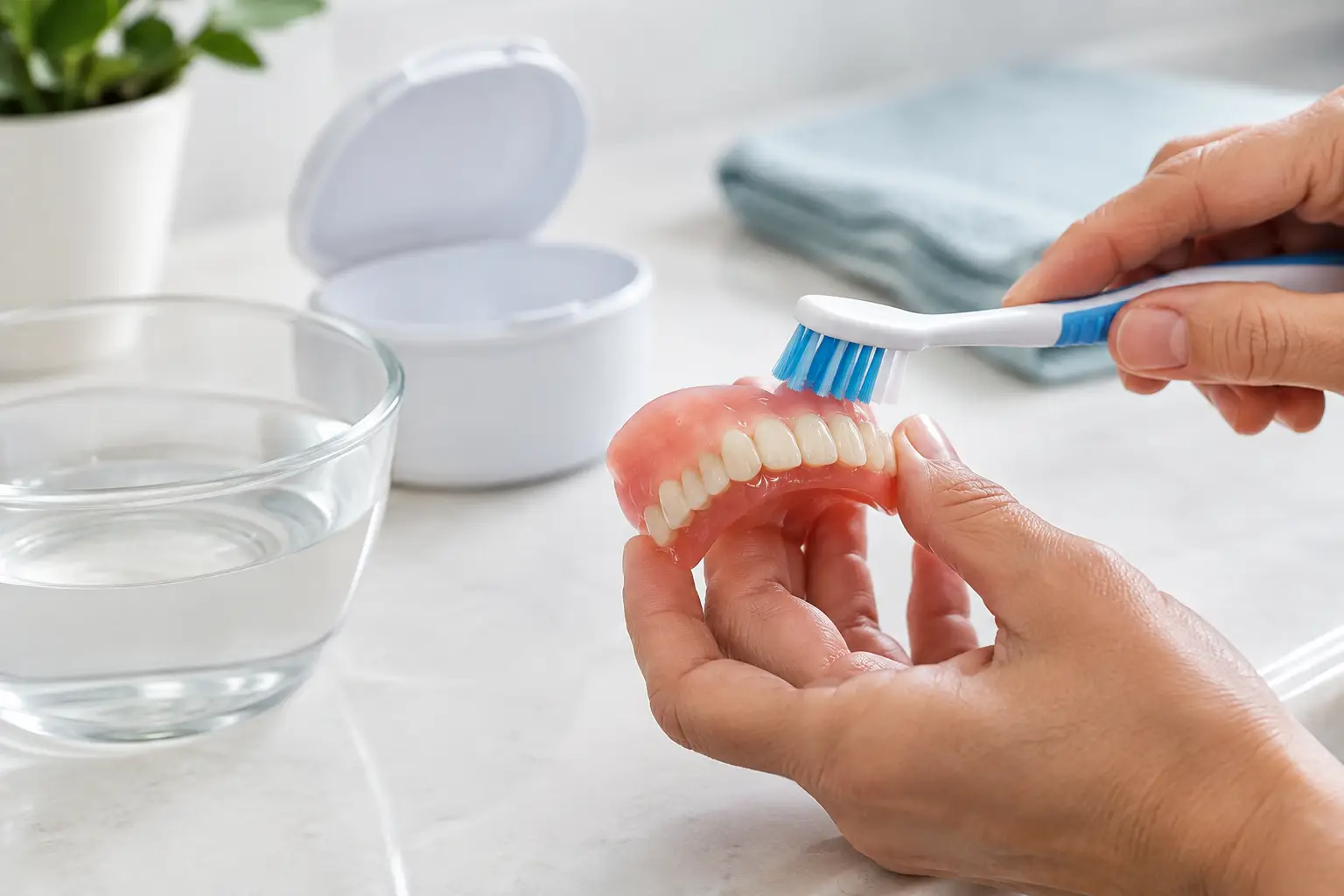
At least once each day, clean your dentures with a soft denture brush or a soft-bristled toothbrush reserved only for this purpose. Use a denture cleanser or a mild hand soap. Ordinary toothpaste may seem like the obvious choice, but many toothpastes are too abrasive for denture materials. Over time, they can leave fine scratches where plaque and stains are more likely to cling.
Brush all surfaces, including the side that rests against your gums. Pay close attention to grooves around artificial teeth and, for partial dentures, the areas around metal or flexible clasps. Clean over a sink partly filled with water or with a folded towel in the basin. Dentures can crack if they slip from your hands and hit a hard surface.
How to Care for Dentures Overnight
Many removable dentures should be taken out at night. Giving your gums time without constant pressure can help prevent irritation and allows you to thoroughly clean both your mouth and your dentures. Place the dentures in water or a dentist-recommended soaking solution so they do not dry out and lose their shape.
Avoid hot water. Heat can warp denture material, changing how it fits against your gums. Do not use bleach, household cleaners, or harsh chemicals unless your dental team has specifically directed you to use a product. These can damage the material, discolor pink acrylic, or affect metal components.
There are exceptions. If you have immediate dentures placed right after extractions, your dentist may ask you to wear them during the first night or follow a different schedule while healing begins. Implant-supported removable dentures may also have specific cleaning and storage instructions. When in doubt, follow the plan made for your own mouth rather than general advice.
Clean Your Mouth Too
Removing dentures is also a good time to care for the tissues underneath them. Use a soft toothbrush or damp cloth to gently clean your gums, tongue, cheeks, and the roof of your mouth. This removes bacteria and stimulates circulation in the gum tissue.
If you wear a partial denture, brush and floss your remaining natural teeth carefully. The teeth beside denture clasps can be more vulnerable to plaque buildup and decay, particularly if food tends to collect in that area. Fluoride toothpaste and regular professional cleanings remain part of your care routine.
A dry mouth can make dentures feel less stable and may increase irritation. Sip water regularly, especially if you take medications that reduce saliva. If dryness is persistent, mention it at your next dental appointment. There may be practical ways to make your mouth more comfortable.
Use Denture Adhesive Carefully
Denture adhesive can help some people feel more secure while eating and speaking, especially as the shape of the gums changes over time. It should be used in small amounts and only on clean, dry dentures. Applying more adhesive than recommended will not create a better fit. Instead, it can make removal and cleaning more difficult.
Adhesive is not a fix for a loose, cracked, or painful denture. If your denture suddenly needs much more adhesive than usual, it may be time for an adjustment, reline, or replacement. Your jawbone and gum tissue naturally change over the years, so a denture that once fit well can gradually become less stable.
Always remove adhesive from your dentures and gums at the end of the day. A soft brush, warm water, and a damp washcloth are usually enough. If you are unsure which adhesive is appropriate, a dentist can recommend an option based on the type of denture you wear.
Protect Dentures From Damage
Dentures are durable, but they are not indestructible. Keep them out of reach of children and pets, who may mistake them for a chew toy. Store them in a labeled container when they are not in your mouth, particularly if you are traveling or staying away from home.
Never try to reshape, glue, or repair dentures yourself. Store-bought repair kits and household glues can contain materials that are not safe for the mouth. A DIY repair can also change the fit, create sharp edges, or make a professional repair more difficult later. If a tooth comes loose, the base cracks, or a clasp bends, set the denture aside and contact a dental office.
Be thoughtful with food as well. You do not need to avoid everything you enjoy, but hard nuts, ice, sticky candy, and very tough foods can place extra stress on dentures. Cut firmer foods into smaller pieces, chew slowly, and try to use both sides of your mouth. With new dentures, softer foods can make the adjustment period more comfortable.
Watch for Changes in Fit or Comfort
A little adjustment time is normal when you first receive dentures. Your mouth is learning a new shape, and you may notice extra saliva, mild pressure, or changes in speaking at first. Reading aloud and starting with soft foods can help you adapt.
Pain, bleeding, persistent sores, clicking, or difficulty keeping dentures in place are not problems you should simply accept. Small pressure points can become larger sore spots if left untreated. A dentist can often make a minor adjustment that restores comfort quickly.
It is also wise to schedule regular dental visits even if you have full dentures. These appointments allow your dentist to examine your gums, jaw, tongue, and soft tissues, screen for concerns that may not be visible to you, and assess the condition and fit of your dentures. Dentures do not last forever. Depending on wear and changes in your mouth, they may eventually need a reline, repair, or replacement.
Common Denture Care Questions
Can I sleep in my dentures?
Usually, removable dentures should come out overnight so your gums can rest and your dentures can be cleaned. However, follow your dentist’s instructions if you have immediate dentures, implant-supported dentures, or a healing concern that requires a different routine.
Can I use mouthwash to soak dentures?
Mouthwash is not generally intended for soaking dentures and may not clean them effectively. Some products can also affect denture materials with prolonged use. Water or a denture-soaking product recommended by your dentist is the safer choice.
Why do my dentures suddenly feel loose?
Gum and bone changes, weight changes, wear on the denture, or damage to the base can all affect fit. Do not try to solve this by adding thick layers of adhesive. A professional evaluation can identify whether an adjustment, reline, or new denture is needed.
Dentures should support your life, not make you worry about every meal or smile. If yours are uncomfortable, damaged, or difficult to keep clean, a calm conversation with a dental team can bring clarity and relief. Gentle care at home, paired with regular checkups, gives you the best chance of keeping your dentures comfortable and your smile feeling like your own.